Description
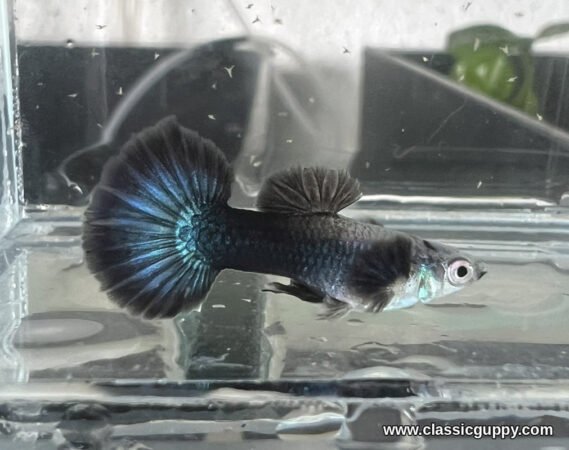
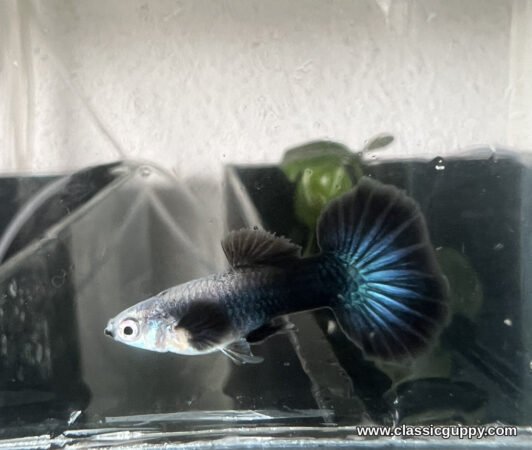
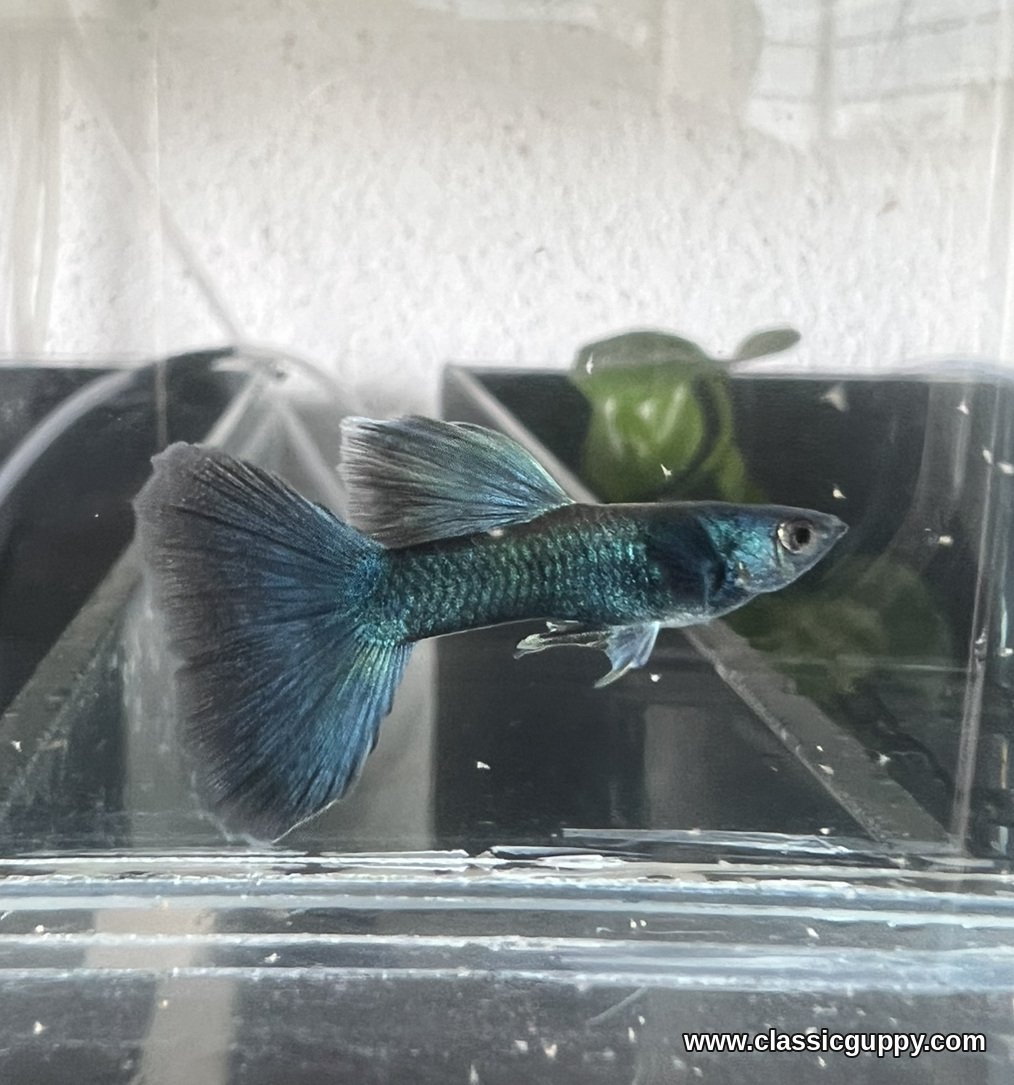
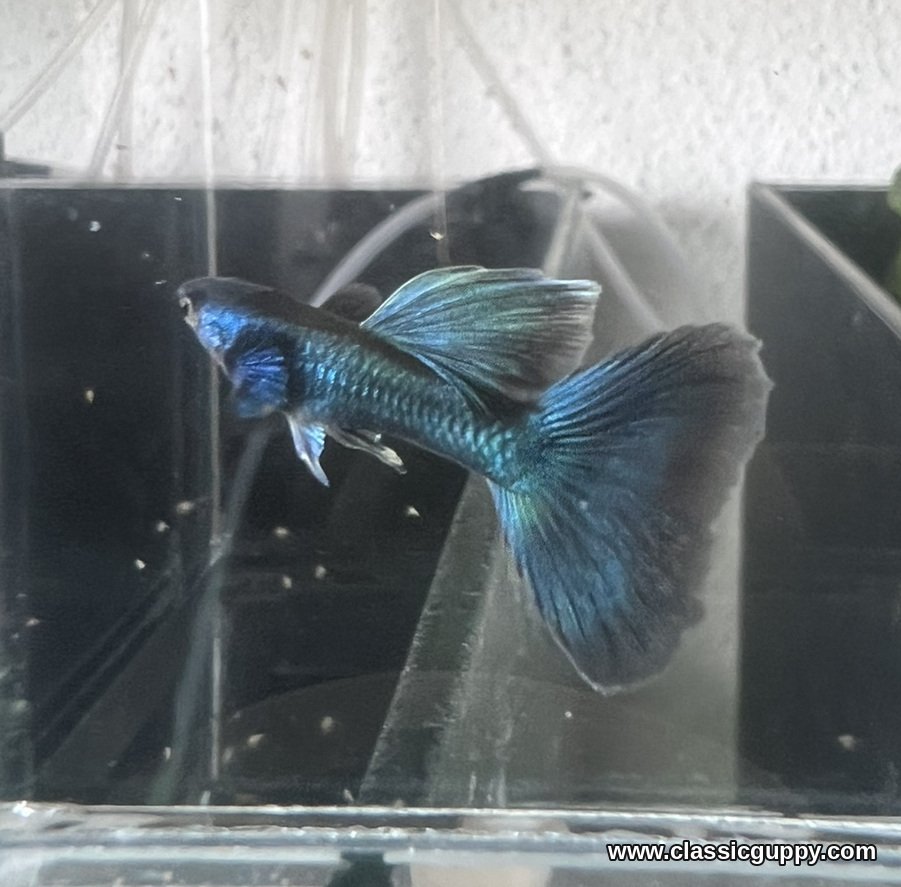
The Moscow Blue guppy is a solid colour fish in the truest sense, one deep shade of blue carried from nose to tail edge with no spots, stripes or pattern breaking it up. The head and shoulder are the darkest and most intense, a metallic navy that flashes electric blue in the light, and the colour carries back through fine, glittering teal scaling along the body.
That unbroken colour is the whole point of the Moscow line. Most guppy strains are built on contrast, a pale body set against a bright tail, but here body, dorsal and caudal are all the same blue, so the fish reads as one solid shape. Under good light the scales throw back teal and steel blue highlights, and the tail darkens gradually toward a near black edge that frames the whole fish.
Moscow guppies are typically a little larger and more solid in the body than many fancy strains, with a deep, full shoulder and a thick caudal peduncle. The caudal opens into a broad delta, the dorsal is large and flag shaped, and both carry the same blue as the body, fading darker toward their outer edges rather than turning a different colour.
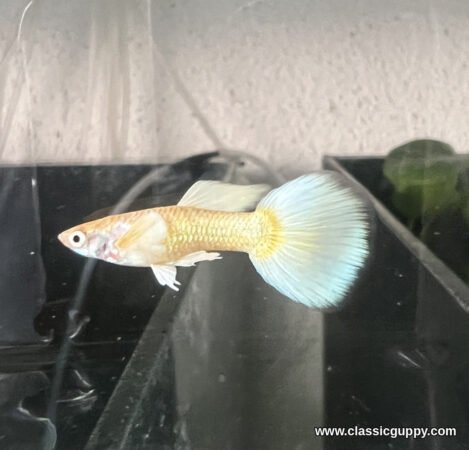
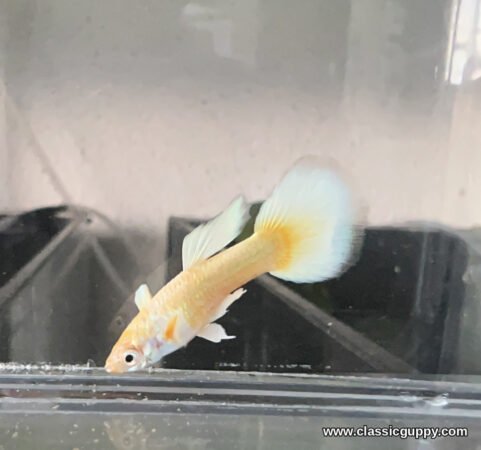
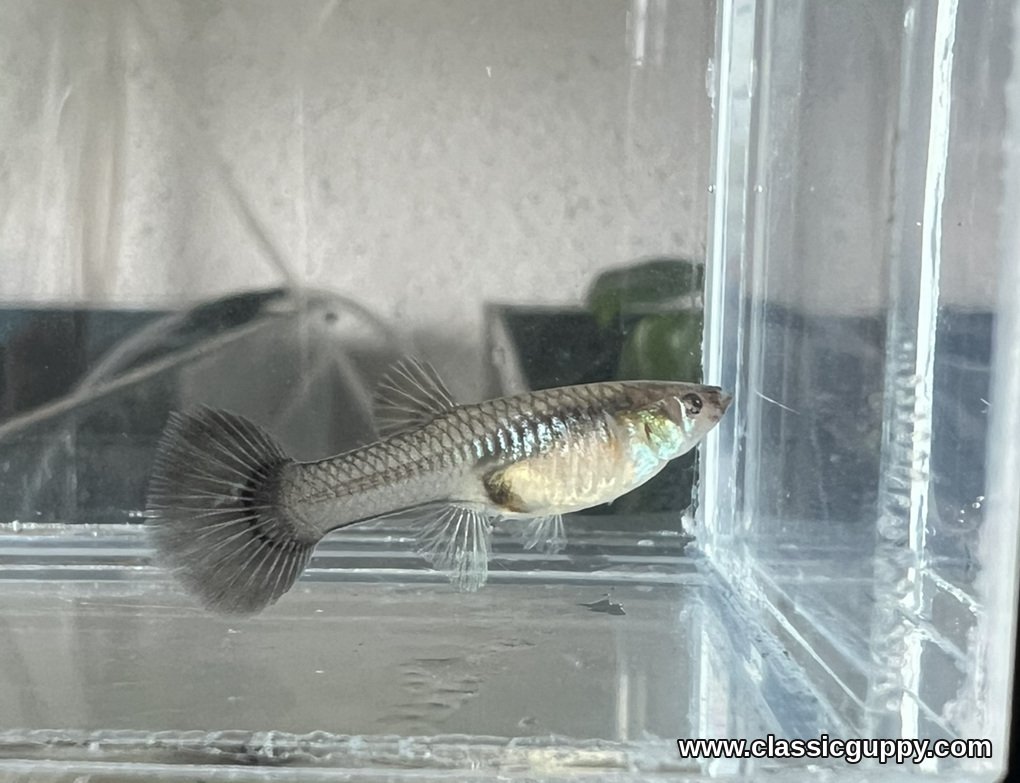
Males carry the full colour, the navy head, the metallic blue body and the large dark tipped tail. Females are different in the body, a grey scaled fish with a silver gold belly and a green gold flash at the gill, but the Moscow line still shows in the tail, which is a round, smoky dark fan with fine black rays rather than the clear or pale tail most females carry.
This is a hardy, easy strain to keep, needing standard guppy care rather than anything unusual. A solid dark fish shows the effect of poor water quickly, with the blue dulling toward grey when conditions slip, so clean, stable water and regular partial changes are what keep the colour deep and even.
Good tankmates include other peaceful livebearers, small tetras, corydoras and similar calm community fish, with fin nippers best avoided as with any guppy strain. A planted tank or a pale sand substrate works especially well for this strain, since a lighter setting lets the deep blue stand out rather than disappear into a dark background.
As livebearers, a settled pair will produce broods of fully formed, free swimming fry roughly every four weeks, with no egg laying stage involved. Moscow fry tend to colour up slowly, looking grey for the first few weeks before the blue starts to show through, so young fish are best judged at around three months old once the full colour has come in.
Sold as a breeding pair.
The Moscow Blue guppy varies between individuals in how deep the blue sits and how much teal shows through the scaling, with some fish reading close to navy and others brighter and more electric, both being normal for this strain. Stable, well maintained water supports the deepest, most even colour, and a routine of weekly partial water changes combined with steady filtration keeps the tail edge intact rather than ragged. A varied diet with occasional live or frozen food added to the usual flake and pellets also supports steady growth and helps the Moscow body reach its full size and depth of colour as the fish matures.
The same Moscow Blue guppy can look almost black under dim light and vivid electric blue under a bright white lamp, so it is worth viewing it under your own tank light before judging the colour.