Description
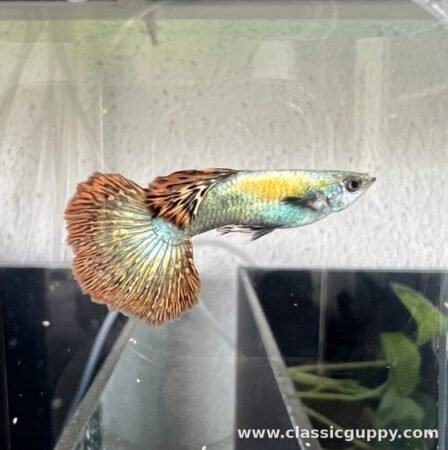
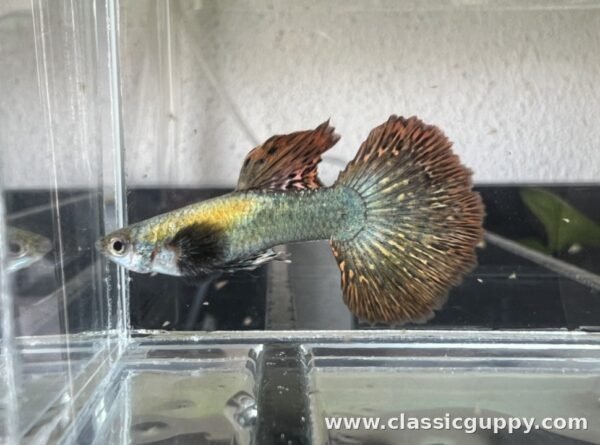
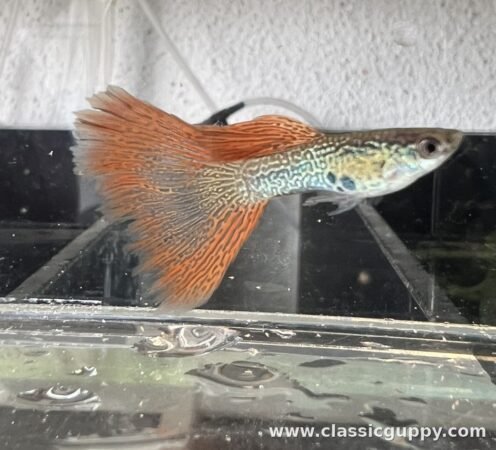
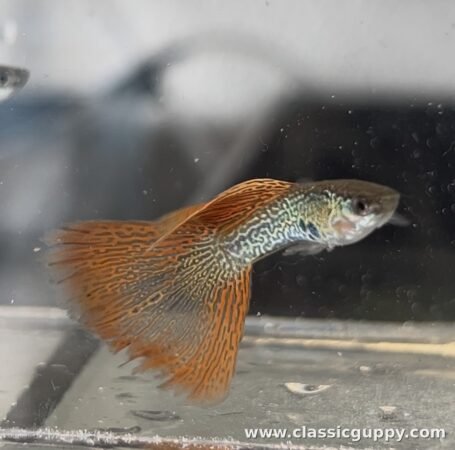
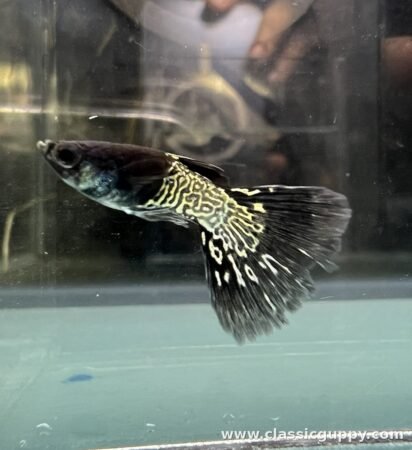
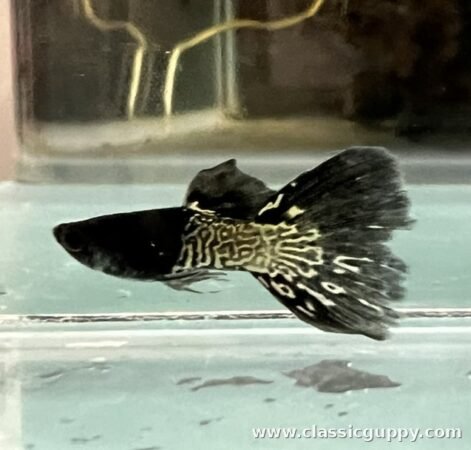
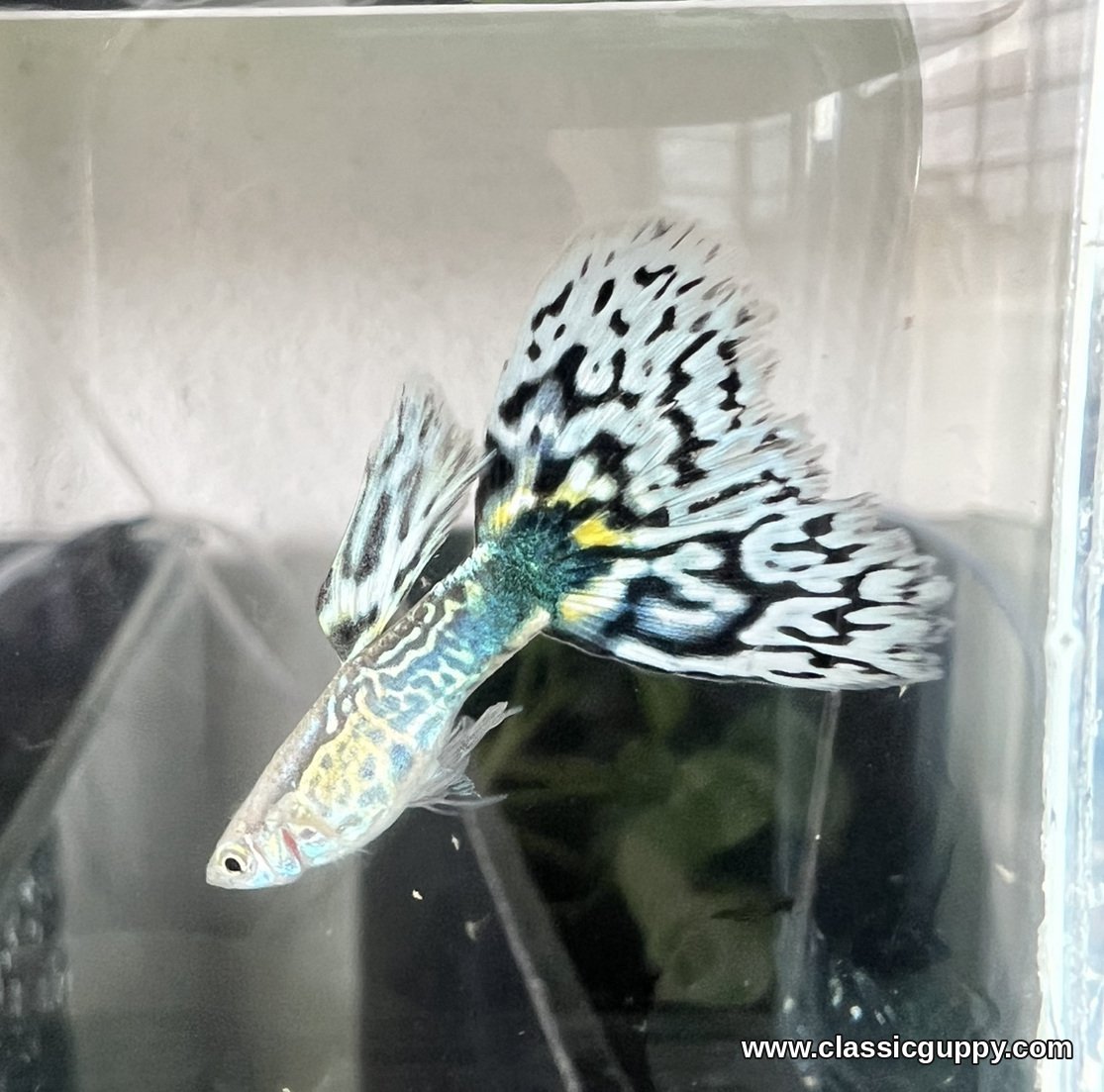
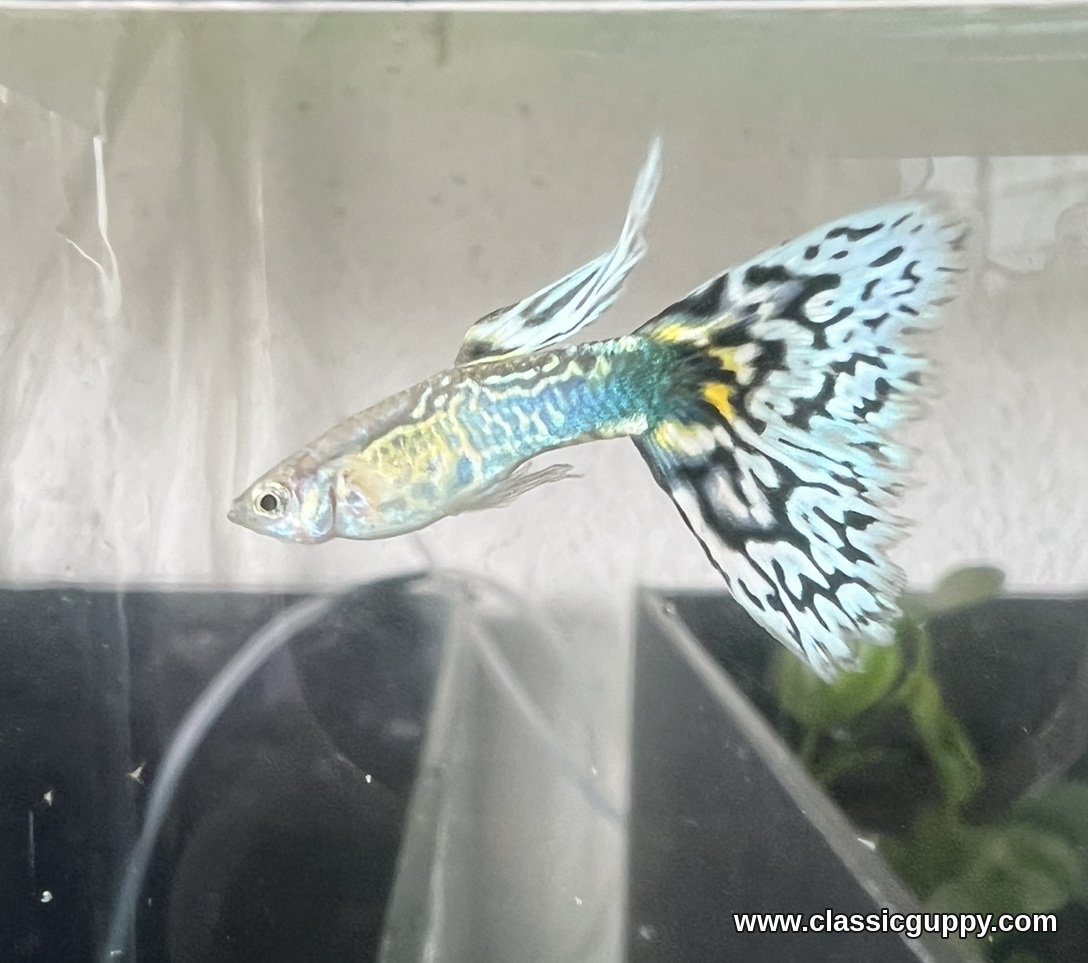
The Snakeskin White Mosaic guppy carries two patterns on one fish, and both are strong. The body is covered in fine wavy snakeskin lines over a base that shifts from warm gold at the shoulder to electric blue along the flank, finishing in a teal green caudal peduncle. Behind that the tail and dorsal turn almost white, a pale ice blue white marbled right through with bold black mosaic markings.
That contrast is the whole point of this strain. Where most mosaic guppies sit on a red, blue or yellow tail, here the base is close to white, so the black mosaic reads with unusual clarity, broken lines and blotches that look almost like calligraphy across the fin. A small flash of bright yellow sits right at the base of the tail where body and fin meet, and it catches the eye every time the fish turns.
Body shape stays close to a standard guppy, slim and balanced, with the snakeskin pattern running the full length from behind the gill to the peduncle. The caudal opens into a broad delta with a finely fringed edge, and the dorsal is tall and flag shaped, carrying the same white and black marbling as the tail so the two fins read as a matched set.
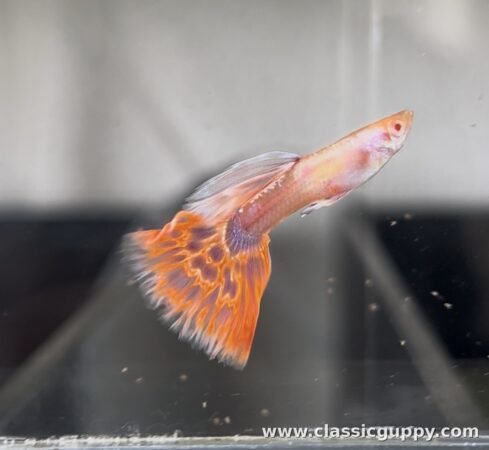
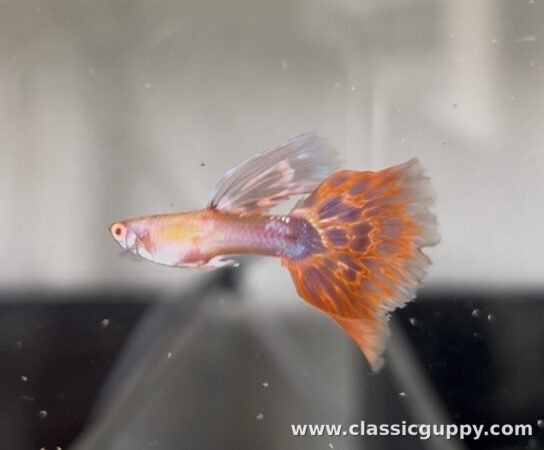
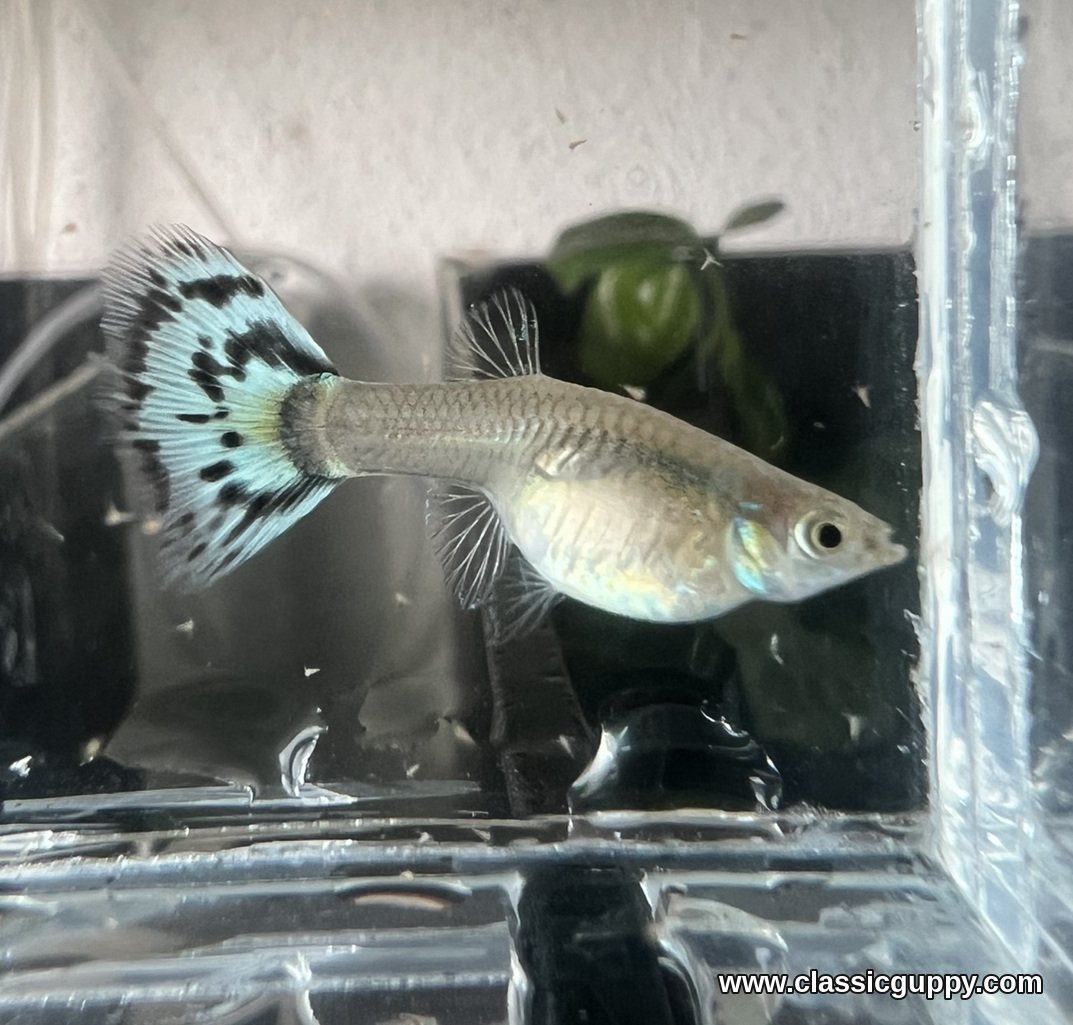
Males carry the full look, the gold and blue snakeskin body, the yellow flash at the tail base, and the widest, most heavily marbled tail and dorsal. Females are quieter but still clearly from the same line, with a silver grey scaled body, a blue flash at the gill, a dark band at the tail base and a pale ice blue tail spotted in black with a fine dark fringe along the edge.
This is a generally easy strain to keep, needing standard guppy care rather than anything unusual. The one thing worth attention is water quality, because a white based tail shows cloudiness, fraying or any early fin problem far more plainly than a dark one does, so clean, stable water keeps it looking crisp.
Good tankmates include other peaceful livebearers, small tetras, corydoras and similar calm community fish, with fin nippers best avoided as with any guppy strain. A dark background or darker substrate is worth considering too, since it makes the white tail and black marbling stand out far more strongly than a pale or bright tank setup, and the fish tend to colour up better when they feel settled.
As livebearers, a settled pair will produce broods of fully formed, free swimming fry roughly every four weeks, with no egg laying stage involved. The snakeskin body pattern tends to show first as the fry grow, while the white tail colour and the black mosaic marbling fill in over the following weeks, so young fish are best judged at around two to three months old.
Sold as a breeding pair.
The Snakeskin White Mosaic guppy varies between individuals in how dense the black mosaic sits across the tail and how much gold versus blue shows on the body, with some fish carrying bold, heavy marbling and others a finer, more open pattern, both being normal for this strain. Stable, well maintained water supports the cleanest white and the sharpest black, and a routine of weekly partial water changes combined with steady filtration keeps the fringed tail edge intact rather than ragged. A varied diet with occasional live or frozen food added to the usual flake and pellets also supports steady growth and helps both patterns reach their fullest expression as the fish matures into adulthood.
The body colour shifts noticeably with the angle of the light, reading more gold from the front and more blue from the side, which is part of what makes this strain rewarding to watch in a planted tank.