Description
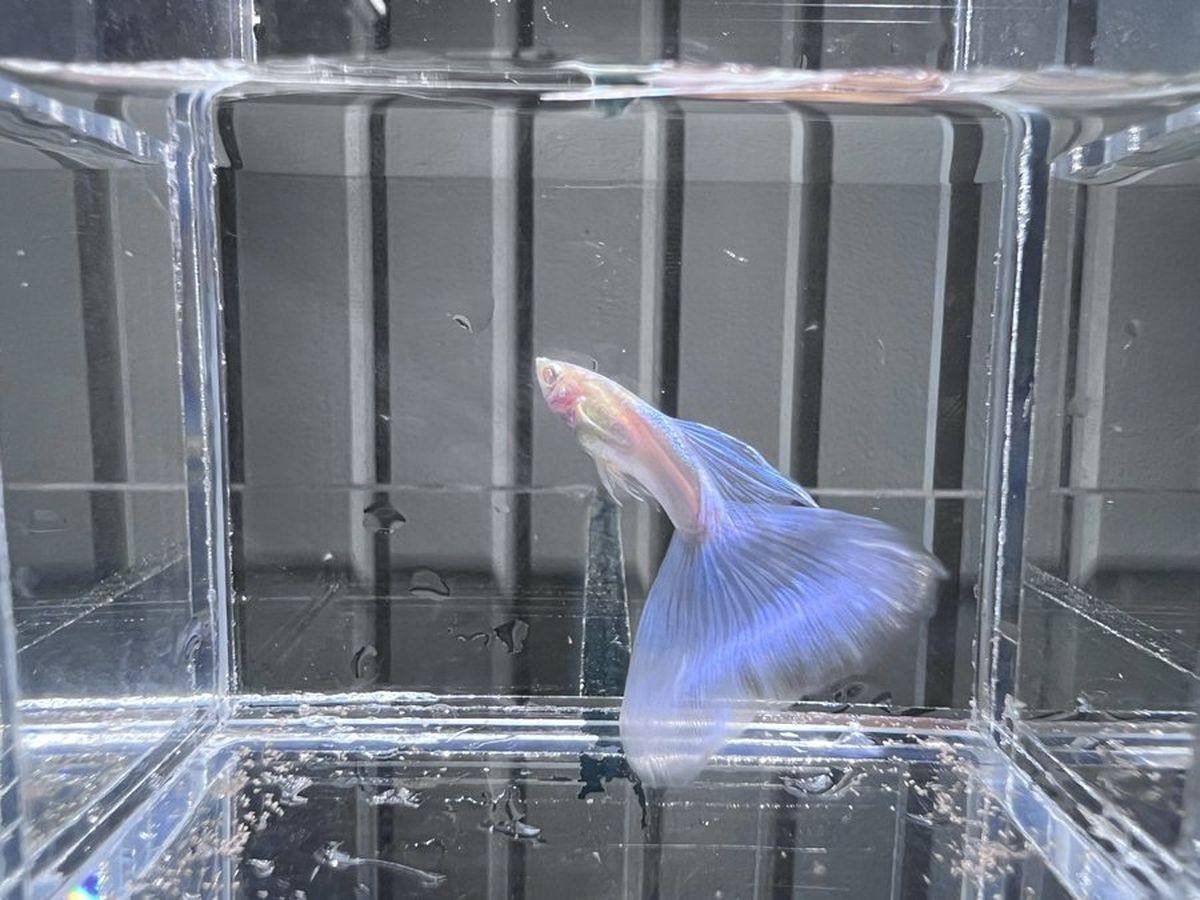
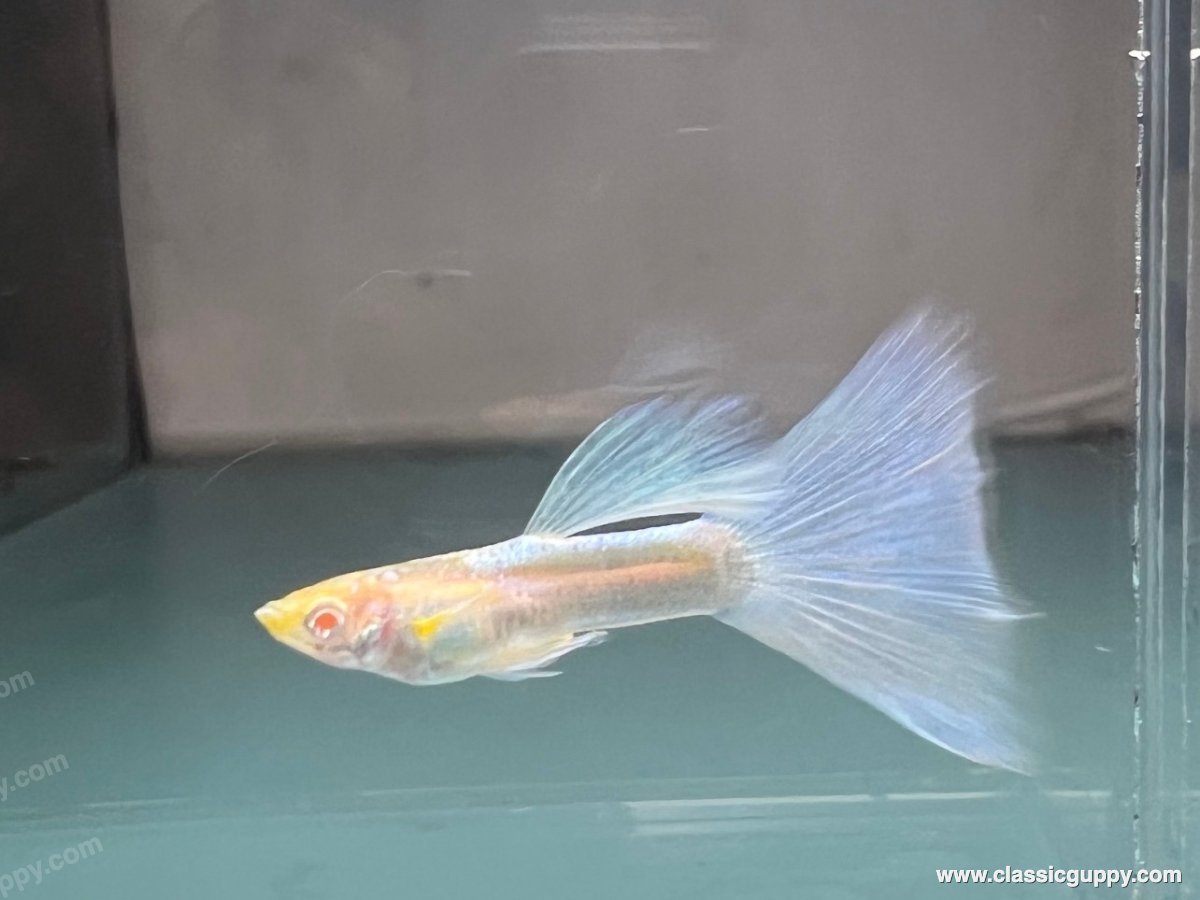
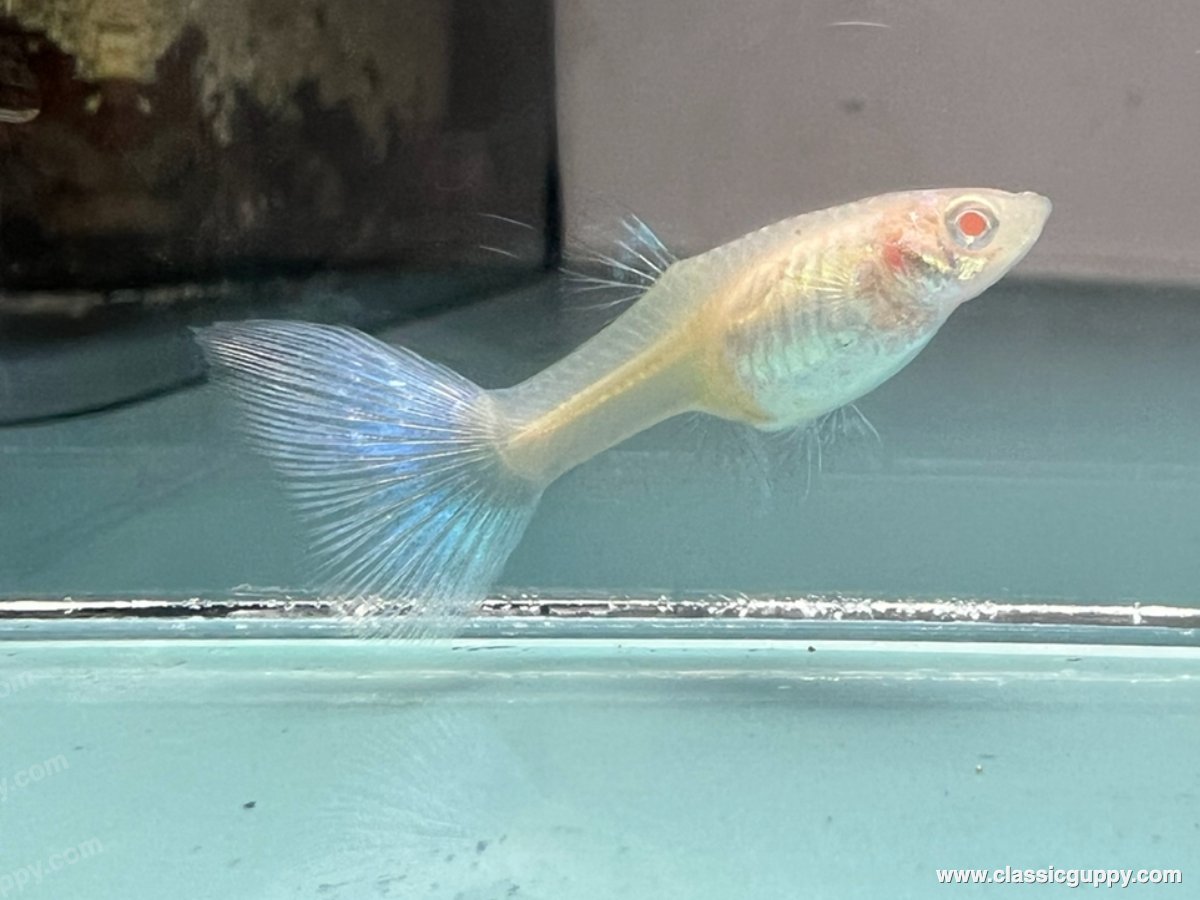
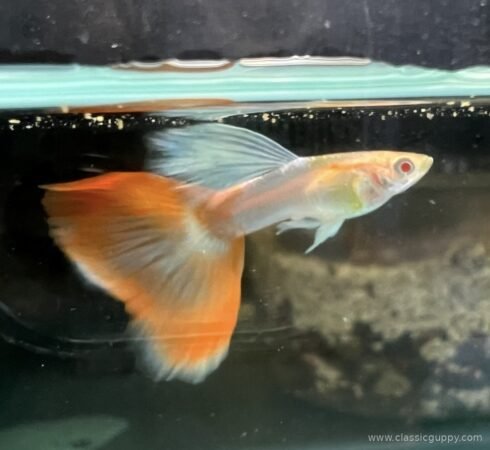
Topaz blue guppies carry a warm pink gold blush concentrated around the head and gill area, fading gradually into a much paler, iridescent body as it moves back toward the tail. That warm to cool transition is fairly gradual rather than sharp, giving the fish a soft, blended look rather than a fish with clearly divided colour zones.
The caudal and dorsal fins settle into a pale, translucent lavender blue, a gentle colour that lets a bit of light pass through the fin membrane and gives the tail a delicate, almost glassy quality when viewed against a bright background. Against the warmer topaz tones up front, that pale blue fin colour creates a soft, understated contrast rather than a bold one, which is part of the appeal for people who prefer subtler colour combinations.
This strain also tends to carry a slightly more compact tail shape compared to some of the larger finned guppy varieties, which keeps the overall proportions balanced and lets the gradual colour transition from head to tail remain the main visual feature rather than competing with an oversized fin structure.
Males display the complete topaz look, the pink gold head and gill blush fading into a pale iridescent body, paired with translucent lavender blue fins. Females are rounder bodied and considerably plainer as guppy females typically are, showing only a faint hint of the topaz blush and much smaller, plainer fins overall.
This is a generally easy strain to keep, needing standard guppy care rather than anything unusual, good filtration, stable temperature and a consistent water change routine. A sponge filter or a guarded power filter intake both suit this fish fine since the fins are a moderate size and not particularly delicate.
Good tankmates include other peaceful livebearers, small tetras, corydoras and similar calm community fish, with fin nippers best avoided as with any guppy strain. Feeding a varied diet of quality flake or micro pellets daily, along with live or frozen baby brine shrimp added a few times a week, supports healthy growth and helps that topaz blush stay warm and well defined against the paler body.
As livebearers, a settled pair will produce broods of fully formed, free swimming fry roughly every four weeks, with no egg laying stage involved. Regular partial water changes of around twenty five percent weekly, combined with steady filtration, help this strain hold its soft topaz to blue colour transition clearly as it grows into a fully coloured adult, and consistent feeding supports the warm head colouring staying rich rather than fading toward a paler tone over time.
Sold as a breeding pair.
Topaz strains can show noticeable variation in just how far back that pink gold head colour extends before fading into the paler body, with some fish carrying a bolder blush and others showing a more subtle transition, both being normal for this strain. Stable, well maintained water supports the fullest expression of that warm head colouring, and a routine of weekly partial water changes around twenty five percent, combined with steady filtration, helps keep this understated strain looking its best rather than fading toward a flatter, less defined colour over time.
A varied diet with occasional live or frozen food added to the usual flake and micro pellets also supports steady growth and helps this gentle colour combination reach its fullest expression as the fish matures into adulthood. Good filtration and stable temperature round out the basics this strain needs.
Dinesh Sharma –
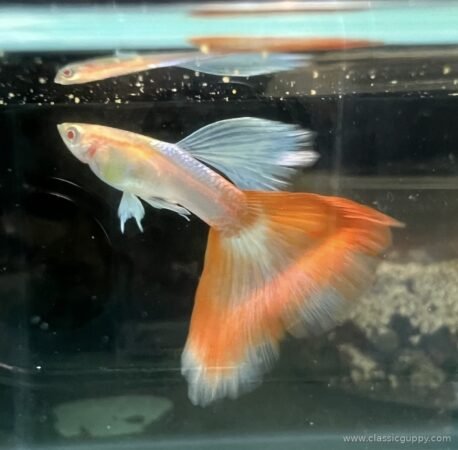
Awesome Quality & colour.