Description
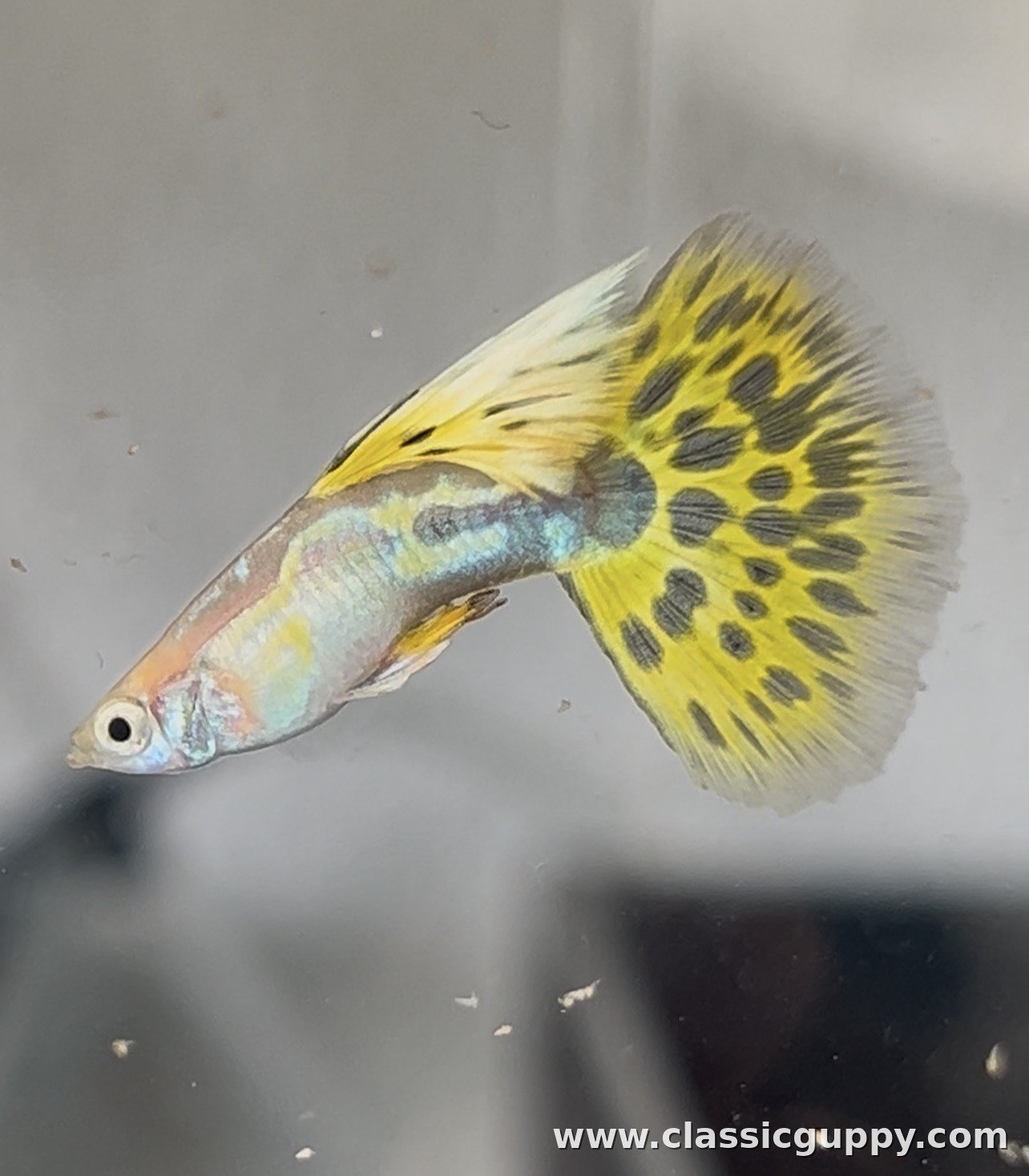
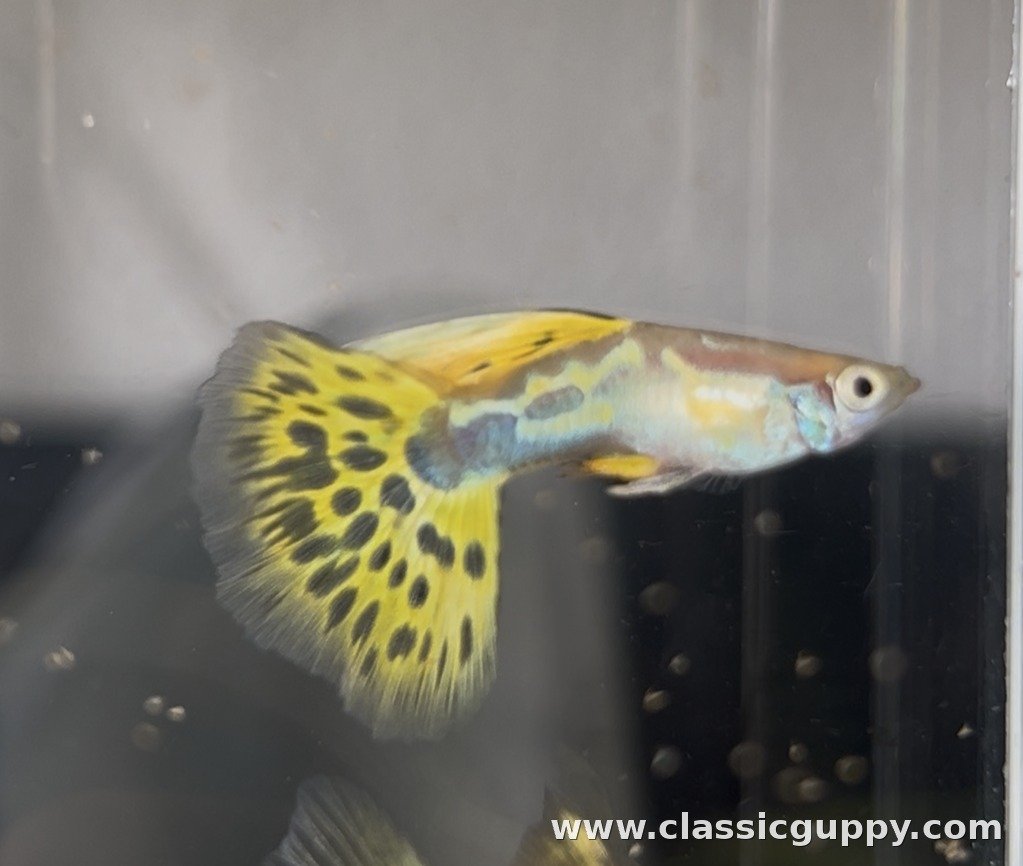
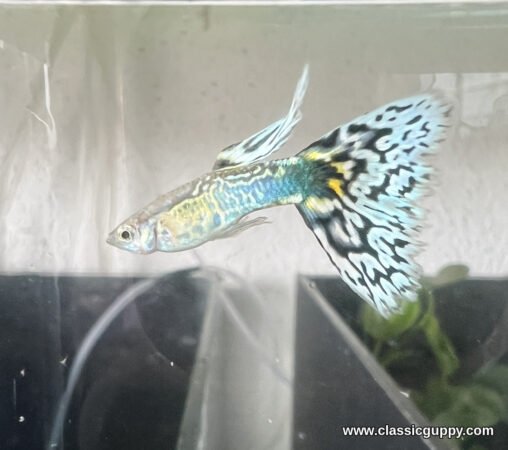
Mosaic guppies get their name from the scattered, tile like markings that spread across the fins, and this blond yellow strain shows that pattern especially clearly against a bright base colour. The body itself runs a pale silvery lavender tone with a soft blue grey saddle sitting across the shoulder, a fairly muted combination that sets up a strong contrast once you get to the fins.
Both the caudal and dorsal fins carry a bright, almost sunny yellow as their base colour, and scattered across that yellow are bold black mosaic spots of varying sizes, some small and rounded, others larger and more irregular in shape. No two fish show quite the same spot arrangement, which is part of the appeal of a mosaic strain, each one ends up being visually unique even within the same brood.
Blond strains also carry a genetic trait that gives them a paler eye and a generally lighter overall look compared to fish with standard dark pigmentation, which helps that yellow fin colour read as even brighter and more vivid than it would on a normal pigmented fish. The combination of the pale lavender body, blue grey saddle and bold black spotted yellow fins makes this one of the more eye catching mosaic patterns available.
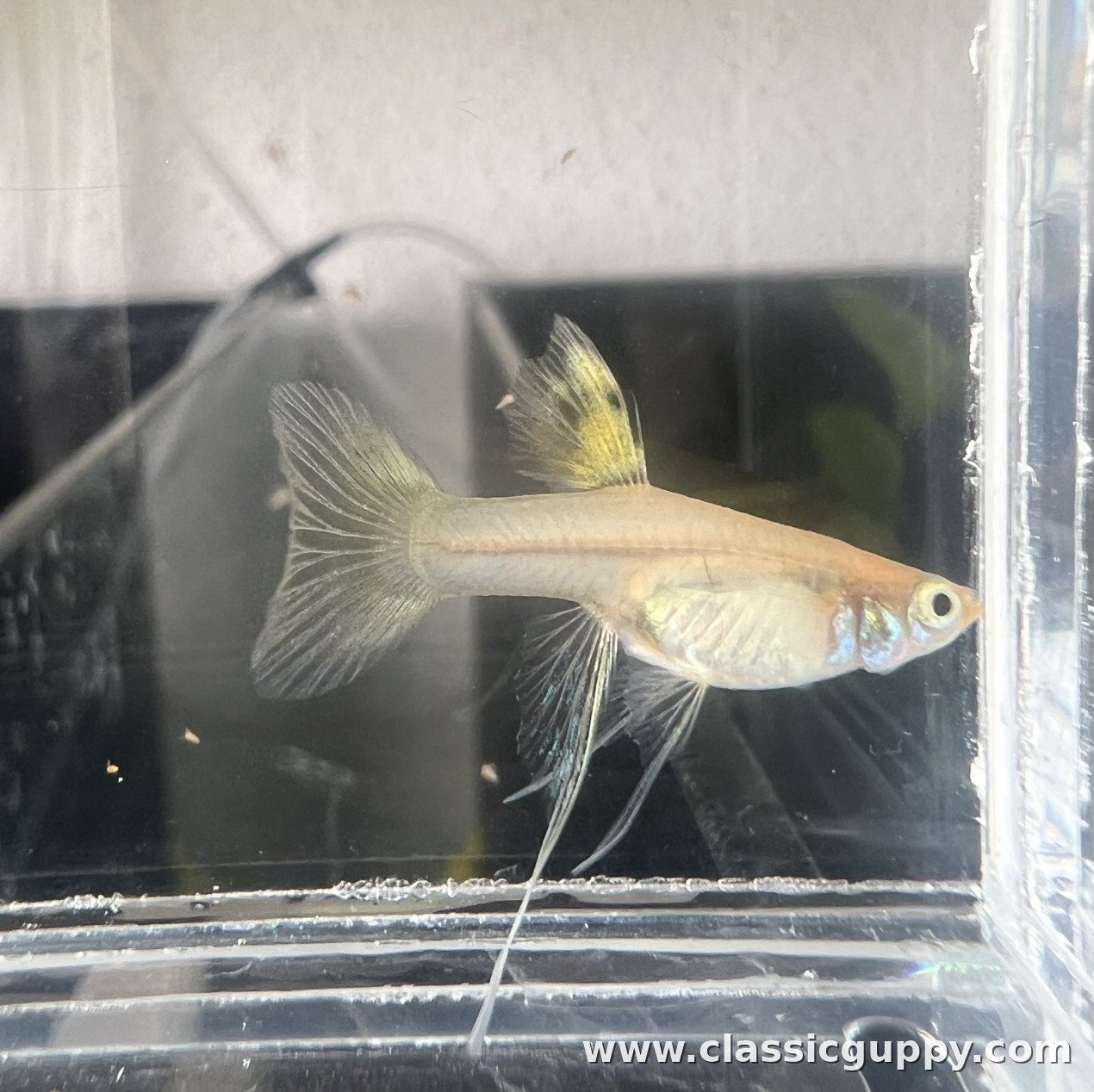
Males carry the complete look, the silvery lavender body with its blue grey saddle, paired with bright yellow fins scattered with bold black mosaic spotting. Females are rounder bodied and considerably plainer as guppy females are, showing only a soft hint of the lavender tone and much smaller fins with far less mosaic patterning visible.
This strain is generally easy to keep and does not need any unusual tank setup beyond the basics, good filtration, stable temperature and a regular water change routine. A sponge filter or a guarded power filter intake both work well since the fins, while nicely patterned, are a standard size and not particularly delicate.
Reasonable tankmates include other peaceful livebearers, small tetras, corydoras and similar calm community fish, with fin nippers best avoided as always so the mosaic pattern stays intact and undamaged. Feeding a varied diet of quality flake or micro pellets daily, along with live or frozen baby brine shrimp or daphnia a few times a week, supports steady growth and helps that yellow fin colour stay vivid rather than fading over time.
As livebearers, guppies produce broods of fully formed, free swimming fry roughly every four weeks once a pair settles into a stable tank, with no egg laying involved at any point. Regular partial water changes of around twenty five percent weekly, combined with consistent feeding, help this mosaic strain hold onto its bright yellow fin colour and bold black spotting as it grows from a young fish into a fully coloured adult.
Sold as a breeding pair.
Blond strains sometimes take a little longer to show their fullest colour compared to standard pigmented guppies, so a young fish that looks fairly pale at first will typically brighten up nicely over its first few months as it matures. Steady water quality helps that process along, and a routine of weekly partial water changes around twenty five percent, combined with reliable filtration, keeps stress low and lets both the lavender body tone and the yellow mosaic fin pattern develop fully. Good lighting over the tank also helps show off the contrast between the pale body and the bold black spotting once the fish reaches its adult size and colouring.
Working a small amount of colour enhancing food into the diet now and then can also help keep that yellow tone bright and vivid as the fish ages.
Reviews
There are no reviews yet.