Guppy fry look nothing like the fish they eventually become. In just three to four months, a barely-visible sliver of a fish can turn into a fully coloured, fully finned adult ready to breed or move into a display tank. If you have ever wondered why some guppies seem to shoot up in size while others stay small and pale, the answer usually comes down to a handful of predictable growth stages and a few simple care habits. Here is what actually happens, stage by stage, as a guppy grows.
Quick Takeaways
- Guppy fry are born live and fully formed, already swimming and eating within hours.
- Most guppies reach their final adult size and full colour somewhere between 10 and 16 weeks.
- Warm, stable water around 26 to 28°C speeds up growth noticeably compared to cooler tanks.
- Frequent small feedings of protein-rich food grow fry faster than one or two big meals a day.
- Males finish growing and colouring up earlier than females, who end up slightly larger overall.
- Fry raised in a separate rearing tank, away from adults, grow faster and survive in far higher numbers.
- Pale colour or stalled growth after a month usually points to crowding or cold water rather than genetics.
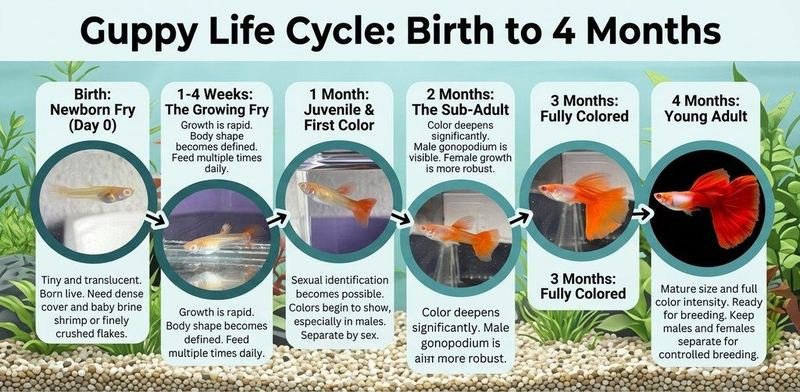
Here is that same timeline in real photos of our own fry and adults, from newborn to a full-colour four-month-old:
Day 1 to 3: The Newborn Fry Stage
Unlike most egg-laying aquarium fish, guppies give birth to fully formed babies that can swim, see, and hunt for food from the moment they are born. A newborn guppy fry is usually around 6 to 8mm long, almost see-through, with a noticeably large pair of eyes and a rounded belly. In a community tank, adult guppies (including their own parents) will happily eat them, so fry need dense floating plants, a breeder box, or a separate rearing tank to survive. Feeding can start within a few hours of birth using crushed flake, powdered fry food, or freshly hatched baby brine shrimp.
Week 1 to 2: The Rapid Growth Window
This is the fastest growth window of a guppy’s life, and it is where care habits make the biggest visible difference. Fry that get three to four small feedings a day, in warm and clean water, can visibly double in size within two weeks. Skimping on feeding or water changes during this stage is the single biggest reason fry stay small and weak later on. Keep the rearing tank simple: a sponge filter (so fry cannot get pulled in), a heater set around 26 to 28°C, and small daily water top-ups rather than one large weekly change.
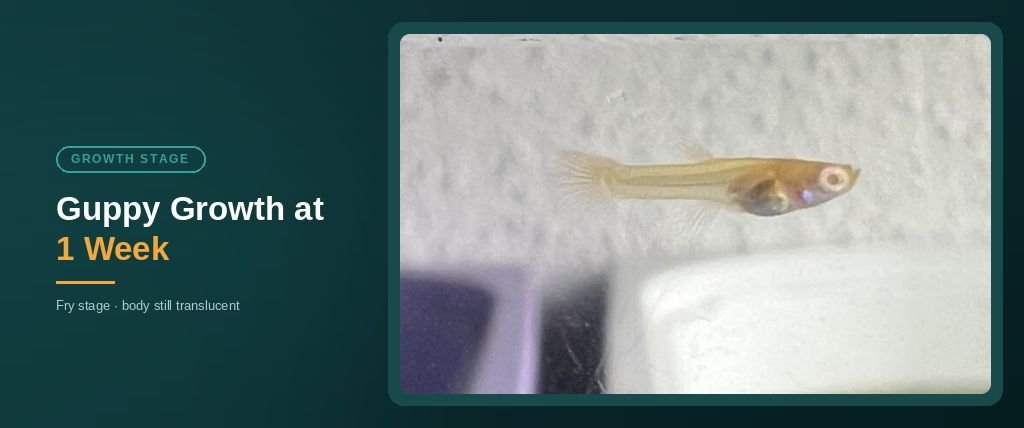
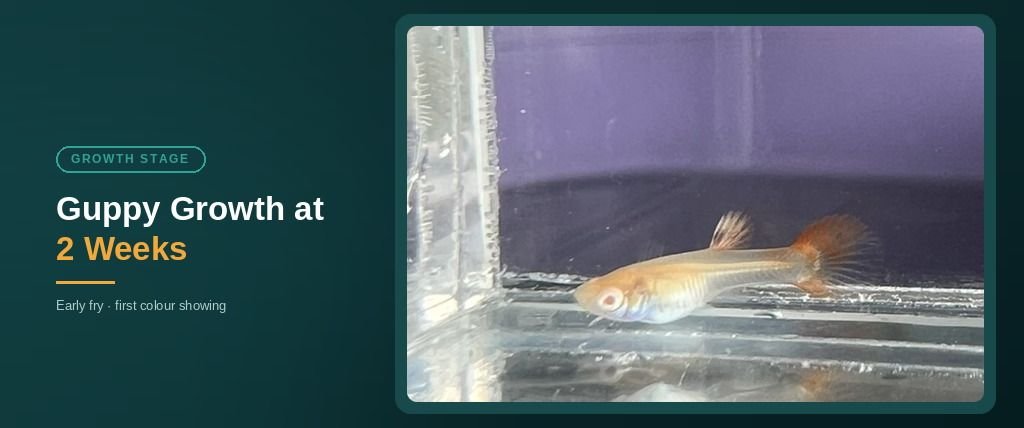
In terms of size, a one-week-old fry is typically around 8mm long and still almost completely see-through, with only the faintest hint of pigment along its spine. By two weeks it is closer to 10mm, and you can usually spot the first real wash of colour building in the tail and along the back, as in the photos below.
Month 1: Working Out Who’s Male and Who’s Female
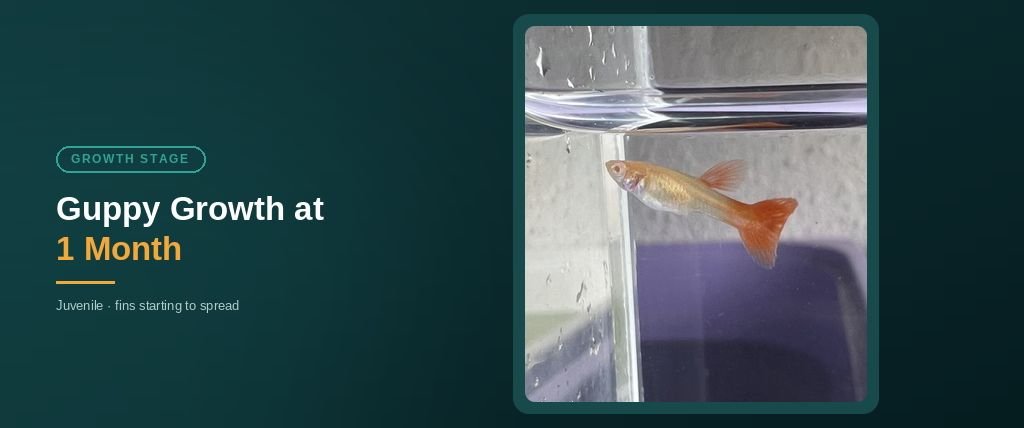
By three to five weeks, most fry are large enough to sex with a bit of practice. Females develop a dark patch near the base of the anal fin called the gravid spot, which gets more visible as they mature. Males begin developing a gonopodium, a modified anal fin used for breeding, and their fins generally start looking slightly longer and pointier than a female’s at the same age. This is also the point where many breeders separate the sexes into different tanks, either to protect a specific breeding pair’s genetics or simply to stop an accidental population explosion a few weeks later.
Size-wise, most fry are around 14 to 16mm long by four weeks old, and their body shape has filled out into a proper little guppy silhouette rather than a fry’s rounder outline, as pictured below.
Month 2: Fins Fill Out and Colour Arrives
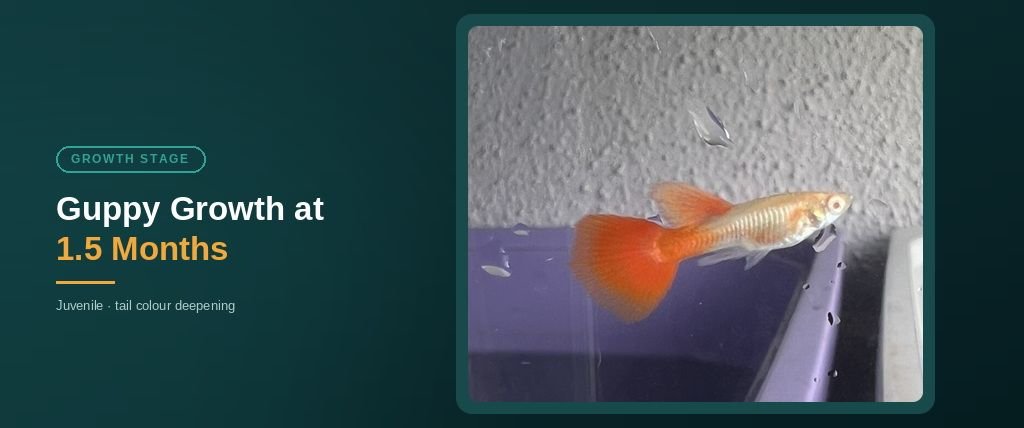
This is usually the most exciting stage to watch. Male fry start showing the colour pattern of their strain, whether that is a solid block of red, a metallic sheen, or the mosaic speckling of a grass strain, and their dorsal and caudal fins keep extending. Females stay comparatively plain, generally silver, olive, or grey, but grow noticeably bigger-bodied than the males in the same batch. Ribbon and dumbo ear strains tend to lag a little behind standard strains at this stage, since their genetics prioritise long fins or oversized pectoral fins over raw body growth.
By around six weeks old, roughly halfway through this stage, fry typically measure 18 to 20mm, and tail colour is visibly deepening from a faint wash into a solid block of colour, as shown below.
Month 3 to 4: Full Grown and Breeding Ready
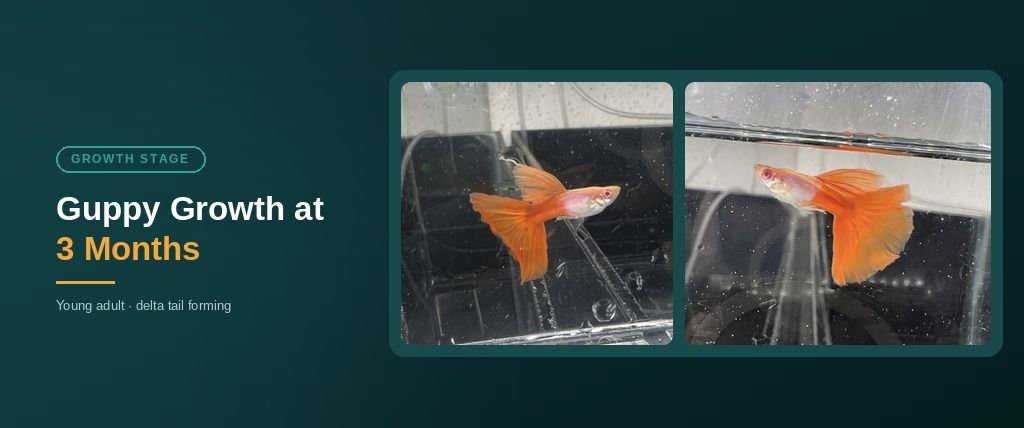
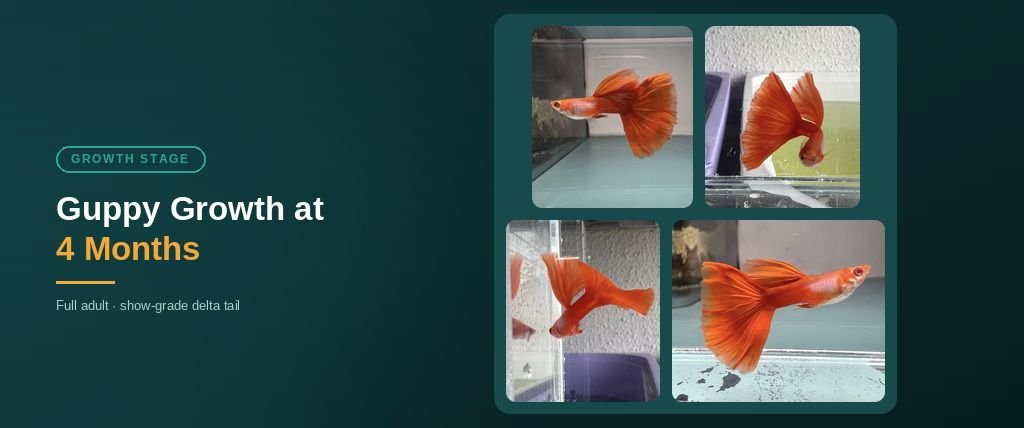
Most guppies reach sexual maturity and close to their final size by around three months, though final fin length in fancier strains can keep improving for another few weeks. A typical adult male ends up around 3 to 4cm long, with females a little larger at 4 to 5cm, though this varies by strain and by how well they were fed as fry. At this point, colour and finnage are basically set, and what you see is close to what you get. If you would like to see what a fully grown, full-colour adult of each strain actually looks like, our shop page has current photos of every strain we breed, from full red and albino lines to grass, ribbon, and dumbo ear varieties.
In terms of measurements, three-month-olds usually sit around 25 to 30mm long, with a tail that is starting to fan out into a proper delta shape. By four months, most guppies are close to their final size and colour: males around 30 to 40mm (3 to 4cm) and females 40 to 50mm (4 to 5cm), with a fully spread, show-quality tail, as pictured below.
What Speeds Up or Slows Down Growth
A handful of factors decide whether a batch of fry reaches full size in ten weeks or twenty. Water temperature matters most: guppies raised in the mid-to-high twenties Celsius grow and mature faster than ones kept in cooler water, though pushing temperatures too high shortens their lifespan. Diet is a close second, since fry need frequent, protein-rich meals to fuel rapid growth, not just once-a-day flake. Stocking density plays a role too, as overcrowded tanks mean fewer nutrients and more stress per fish. Genetics and strain also set some natural limits, which is one reason two fry from the same litter can still end up noticeably different sizes as adults.
Tips for Raising Healthy, Fast-Growing Fry
- Move fry to a separate rearing tank as early as possible so adults cannot eat them and food is not being wasted on bigger fish.
- Feed small amounts three to four times a day rather than one large meal, using powdered fry food, baby brine shrimp, or crushed flake.
- Keep the heater steady around 26 to 28°C and avoid sudden temperature swings during water changes.
- Top up water gently and often instead of doing big, infrequent changes that shock young fish.
- Do not rush sexing and separating fry, but do not wait too long either, since females can breed as early as four to six weeks old.
- Watch for size differences within a batch and consider feeding smaller fry separately so they are not out-competed by faster growers.
Growth speed will vary a little from batch to batch, but the pattern above holds true for almost every strain we breed. If you are just getting started, our newbie guide to choosing guppies walks through picking a healthy first fish, and our guppy strain guide breaks down the different colour and fin types you will see as your own fry grow up. Once you know what you are aiming for, you can browse our current guppies to see fully grown, full-colour adults ready to bring home.
As fry mature and colour up, you’ll start to notice sex differences — our male vs female guppy guide and pregnancy signs and stages guide cover what to look for. Ready to add a fully-grown, colourful adult to your tank? The Albino White Guppy and Albino Full Red Guppy are both easygoing, budget-friendly picks for new keepers.