Red cherry shrimp have become one of the most searched aquarium animals in India over the last year, and most people who buy them already keep guppies. So the question is natural: can guppies and cherry shrimp live in the same tank? They can, and in a well planted tank the pairing works very well. But it only works if you understand one thing from the start. Your guppies will not hurt the adult shrimp, but they will eat baby shrimp whenever they find them. Every decision in this guide is about making sure they do not find too many.
The Short Answer
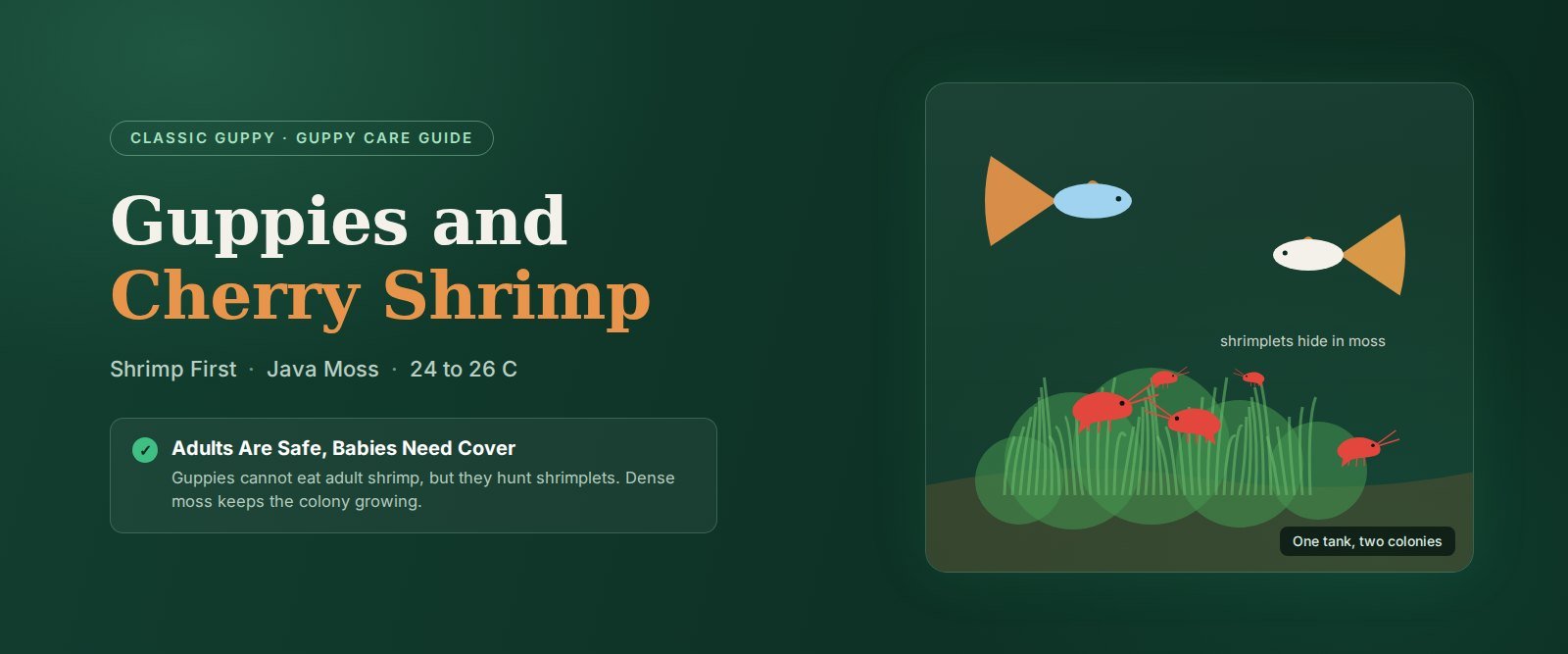
- Adult cherry shrimp are safe. At 2 to 3 cm they are too big for a guppy to swallow.
- Shrimplets are not. Newly hatched shrimp are about 1 to 2 mm and guppies hunt them.
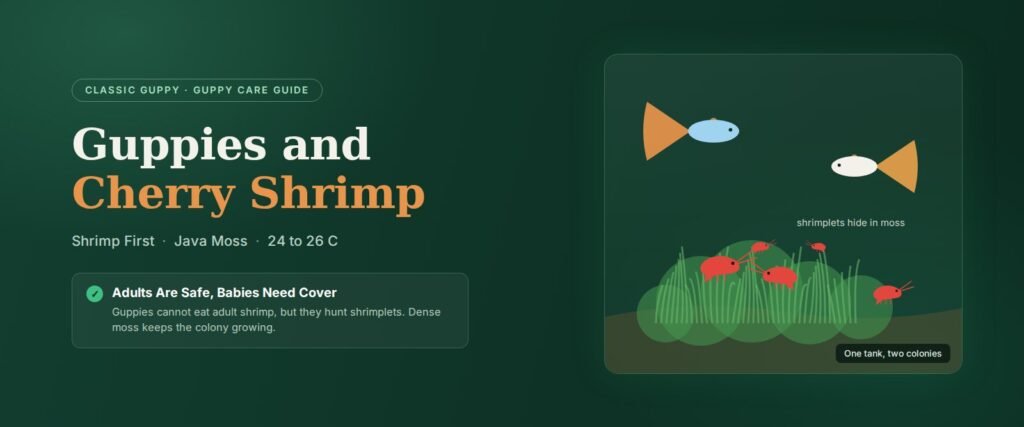
- The fix is cover, not luck. Java moss, dense plants and leaf litter give shrimplets places guppies cannot reach.
- Start the shrimp first. Let the colony settle for four to six weeks before guppies go in.
- Watch the medicine cabinet. Copper based fish medicines kill shrimp.
Why This Pairing Works
Cherry shrimp, Neocaridina davidi, and guppies want surprisingly similar water. Both are happy in hard to moderately hard water with a pH a little above neutral. They are also hardy enough for a beginner. And because neither grows large, a 2 ft tank can hold a healthy group of each.
They also use the tank differently. Guppies live in the upper and middle water. Shrimp spend their lives on the bottom, on plant leaves and on the sponge filter, picking at biofilm, soft algae and the bits of food the guppies miss. In a good setup the shrimp act as a small cleanup crew, and the guppies get a calmer, more natural looking tank around them.
What Guppies Actually Eat
A healthy adult cherry shrimp is safe in a guppy tank. Guppies have small mouths built for flake, micro pellets and tiny live food. They may nip at a shrimp out of curiosity, but they cannot eat one.
Shrimplets are a different story. According to this red cherry shrimp care guide, a female carries 20 to 30 eggs under her tail for two to four weeks, and the babies hatch as perfect miniature shrimp barely bigger than a grain of sand. To a guppy that looks exactly like live food. Keepers who mix the two almost always report the same thing: the colony still grows, but fewer babies make it to adulthood than in a shrimp only tank.
A shrimp that has just moulted is also soft and vulnerable for a few hours. Most guppies ignore them, but a hungry tank is more likely to bother one.
Water Parameters That Suit Both
| Parameter | Guppies | Cherry shrimp | Shared target |
|---|---|---|---|
| Temperature | 24 to 28 C | 20 to 26 C | 24 to 26 C |
| pH | 7.0 to 8.0 | 6.5 to 8.0 | 7.0 to 7.6 |
| GH | 8 to 12 dGH | 6 to 10 dGH | 7 to 10 dGH |
| TDS | 200 to 400 ppm | 150 to 300 ppm | 200 to 280 ppm |
| Ammonia and nitrite | 0 | 0 | 0 |
Temperature is the one to watch in India. Cherry shrimp breed faster in warm water but start to suffer when the tank sits above 28 C for long. In April and May a tank in a hot room can cross 30 C. Keep the tank out of direct sun, leave the lid slightly open for air movement and use a small clip fan over the water if needed.
Shrimp also need minerals in the water to build a new shell every time they moult. Very soft water, including pure RO water, causes failed moults where the shrimp gets stuck halfway out of its old skin. If you use RO water, our RO water for guppies guide covers how to bring it back to a safe hardness. The full guppy numbers are in our guppy water parameters guide.
How to Set Up the Tank
Tank size and filter
A 2 ft tank is a comfortable minimum for both. A sponge filter is the right choice, because it cannot suck in shrimplets and the sponge surface grows biofilm the shrimp graze on all day. If you already run a hang on back or canister filter, cover the intake with a piece of fine sponge. Our guide to the best filter for a guppy tank explains the differences.
Cover for shrimplets
This is the part that decides whether the colony grows or slowly disappears. Shrimplets need places that guppies cannot get into.
- Java moss or Christmas moss: the best single thing you can add. A large clump of moss is a nursery, food source and hiding place in one.
- Fine leaved plants: hornwort and similar plants add cover in the middle of the tank. See our list of easy live plants for guppy tanks.
- Floating plants: they break up the surface and keep guppies from scanning the whole tank at once.
- Leaf litter and wood: a few dried leaves on the bottom grow biofilm and give shrimplets cover.
- Small gaps: a pile of smooth pebbles or a hollow piece of wood creates spaces too small for an adult guppy.
The cycle comes first
Shrimp are less forgiving of ammonia and nitrite than guppies. Never add shrimp to a new tank. The tank should be fully cycled and running for a few weeks with stable readings. If you are starting fresh, follow our guide on how to cycle a new guppy tank first.
The Right Order: Shrimp First
Add the shrimp before the guppies. Give the colony four to six weeks to settle, find their feeding spots and start carrying eggs. By the time the guppies arrive, the moss is full of shrimp of different sizes and a few berried females are already hidden in it.
If the guppies are already in the tank, you can still do it. Add the shrimp straight onto a clump of moss, feed the guppies first so they are busy, and switch the tank lights off for the rest of the day.
Acclimate shrimp slowly. They handle sudden changes in TDS and hardness worse than guppies do. A slow drip over 45 to 60 minutes is safer than a quick float.
Feeding Without Starving the Shrimp
In a mature planted tank, cherry shrimp feed themselves on biofilm and algae. They do not need much extra.
- Feed the guppies as normal, small amounts they finish in about a minute. Our guide on how often to feed guppies has a full schedule.
- Two or three times a week, drop a small piece of shrimp food or blanched vegetable near the moss after the guppies have eaten.
- Do not overfeed to make sure the shrimp get some. Leftover food is the fastest way to crash water quality.
Well fed guppies hunt shrimplets less. A guppy that is always slightly hungry spends its day searching the moss.
Stocking Numbers
The more guppies per shrimp, the harder it is for the colony to keep up. As a rough guide for a 2 ft tank, start with 10 to 15 cherry shrimp and keep the guppy group modest, a trio or two pairs. Remember that guppies breed too. A tank that starts with four guppies can hold twenty within a few months, and guppy fry compete with shrimp for food and space. Our guppy stocking guide explains how fast those numbers climb.
Shrimp do not eat healthy guppy fry. They will clean up a dead fry, which is normal scavenging.
Mistakes That Wipe Out a Colony
- Copper medicines. Many fish treatments contain copper, and copper kills shrimp at doses that are safe for fish. Read the label on anything in our guppy medicine list before using it in a shared tank. If a guppy needs treatment, move it to a separate tank.
- Big water changes with different water. A large change with water at a very different TDS or temperature can trigger mass moulting and deaths. Keep changes steady and matched.
- Bare tanks. A beautiful clean aquascape with open sand and no moss means guppies eat almost every shrimplet.
- Adding shrimp to a new tank. Shrimp need a mature, stable tank with biofilm already growing.
- Adding bigger fish later. Mollies and larger fish will eat adult shrimp, not just babies.
Frequently Asked Questions
Will guppies eat cherry shrimp?
Not the adults. Guppies are too small to eat a full grown cherry shrimp, but they will eat newly hatched shrimplets whenever they can find them.
Can cherry shrimp breed in a guppy tank?
Yes. With enough moss and plant cover the colony keeps growing, just more slowly than in a shrimp only tank.
How many cherry shrimp should I add with guppies?
Start with 10 to 15 in a 2 ft tank. A bigger starting group gives the colony more breeding females and makes it more likely to keep ahead of the guppies.
Do cherry shrimp clean a guppy tank?
They help. Shrimp eat leftover food, biofilm and soft algae, but they do not replace water changes or filter cleaning.
Can I keep cherry shrimp with guppy fry?
Yes. Shrimp do not hunt healthy fry, and fry are too small to harm shrimp. A fry tank with moss and a few shrimp works well.
What temperature is best for guppies and cherry shrimp?
Around 24 to 26 C suits both. Avoid long spells above 28 C, which stress shrimp in Indian summers.
The Short Version
Guppies and cherry shrimp make a good team when the tank gives the shrimp somewhere to hide. Start with a cycled, planted tank and a sponge filter, add the shrimp first, fill the bottom with moss, keep the guppy group small and never use copper medicine in the shared tank. The adults will be fine. The babies are the real test, and with enough cover enough of them grow up to keep the colony going.
When your tank is ready, browse our home bred guppy strains in the Classic Guppy shop, shipped across India with live arrival guaranteed, and follow our acclimation guide on arrival day.