Every monsoon, municipal health teams across Maharashtra and other states release guppies into wells, ponds and water tanks to fight dengue and malaria. Using guppy fish for mosquito control is one of the oldest natural methods there is, and it works because guppies hunt mosquito larvae at the water surface all day. But it is not as simple as dropping a few fish into any standing water. Where you put them, which guppies you choose and what you avoid makes the difference between real control and fish that disappear in a week.
The Short Answer
- Guppies eat mosquito larvae eagerly. In lab tests, one adult guppy ate around 50 to 120 larvae a day, depending on sex and mosquito type.
- They do not eat pupae. Larvae that reach the pupa stage can still hatch, so guppies reduce mosquitoes rather than remove them completely.
- Best places: garden tanks, cement tubs, ornamental ponds, lotus bowls, fountains and other closed water that is not used for drinking.
- Never release them into rivers, lakes or natural ponds. Guppies are a non native species in India.
- Hardy guppies work better than long finned show strains in outdoor water.
Why Guppy Fish Work for Mosquito Control
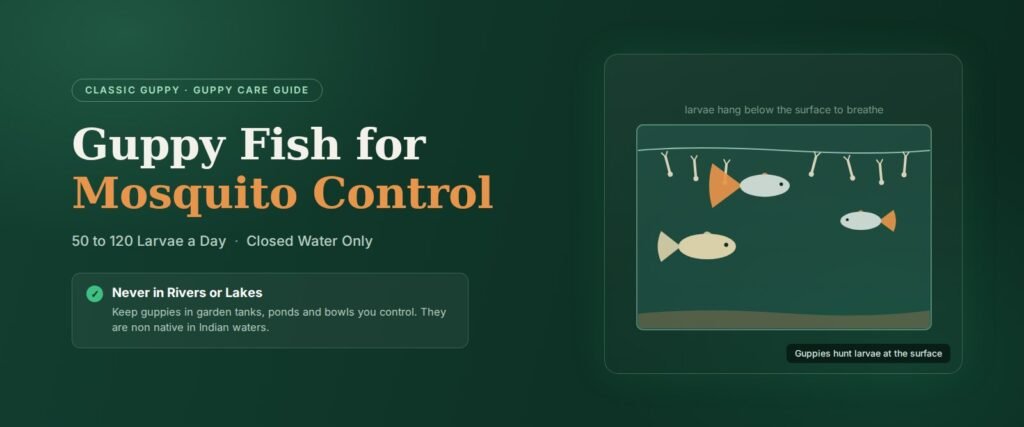
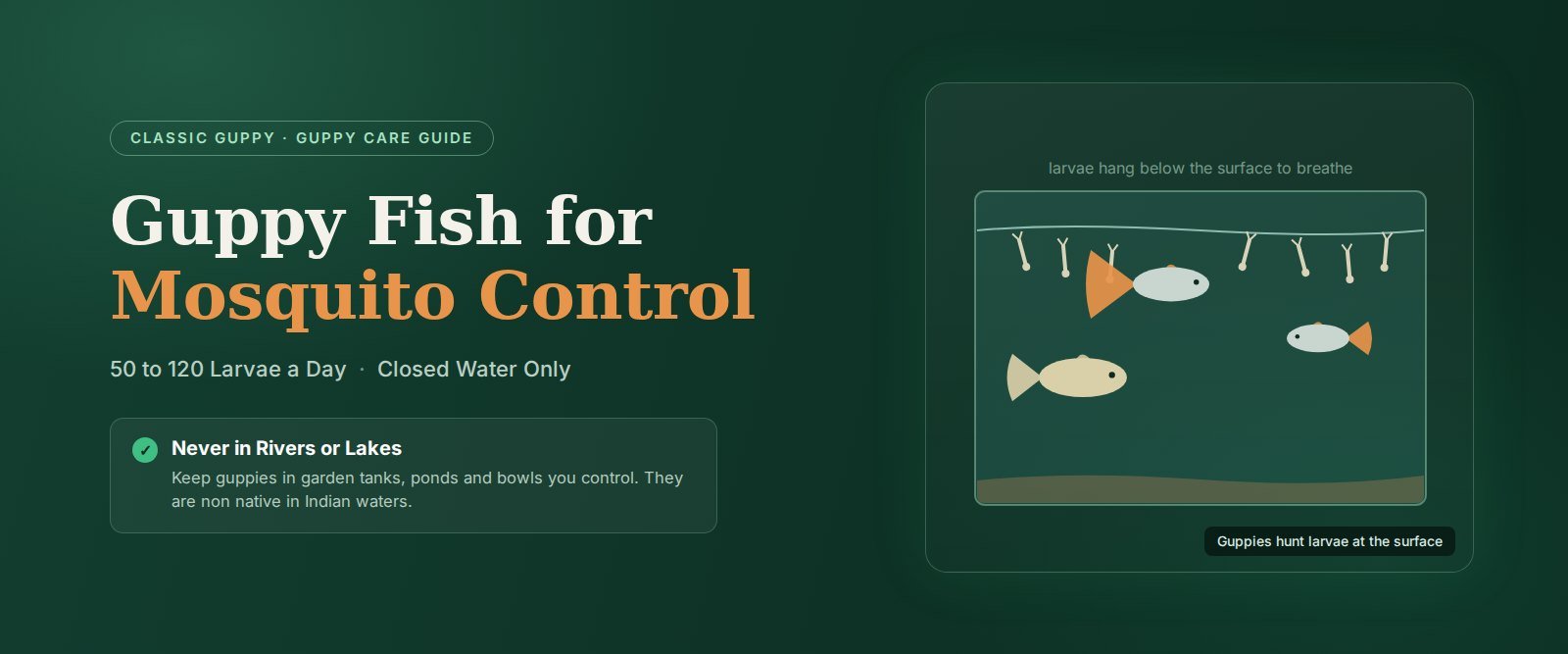
Mosquito larvae spend most of their time hanging just under the surface to breathe. Guppies are surface feeders with upturned mouths, built to pick small food from exactly that zone. They are also small enough to reach shallow edges and between plant stems where larger fish cannot go.
Guppies breed in the same water, so a small starting group grows into a self sustaining population if conditions are right. And they are tough. Guppies tolerate warm water, a wide range of hardness and the kind of rough conditions found in outdoor containers.
How Many Larvae Do Guppies Eat?
A study published in the Southeast Asian Journal of Tropical Medicine and Public Health tested adult guppies against three common mosquito species. Female guppies ate more than males in every test.
| Mosquito | Female guppy, larvae per day | Male guppy, larvae per day |
|---|---|---|
| Aedes aegypti, the dengue mosquito | About 121 | About 99 |
| Aedes albopictus | About 106 | About 74 |
| Culex quinquefasciatus | About 72 | About 48 |
The same study found that guppies preferred late stage larvae and completely ignored pupae. In practice that means a container with guppies in it is a very poor place for mosquitoes to breed, but a few may still escape if the fish are well fed, too few, or blocked by thick plants.
Where Indian Cities Use Guppies
Using guppy fish for mosquito control is a regular part of monsoon disease control in many places. In 2026, the Pune Municipal Corporation included guppy release in its monsoon campaign against dengue, Zika and malaria, and Chhatrapati Sambhajinagar released guppies at 512 sites across its ten zones in August. Several civic bodies also hand out guppies free to residents who register at local health centres.
At the same time, the practice is under review. In January 2025, the National Green Tribunal issued notice to the central government on the use of guppies and gambusia for mosquito control, after the National Biodiversity Authority listed both as invasive alien species that can compete with native fish. That concern is about natural waterbodies, and it is the reason this guide is clear about where guppies should and should not go.
Where to Keep Guppy Fish for Mosquito Control
The best places are closed, man made containers that collect water and are hard to empty.
- Cement tanks and tubs in gardens and terraces.
- Ornamental ponds and lotus or water lily bowls.
- Decorative urlis and fountains that hold water through the season.
- Unused or decorative wells on private property, where allowed.
- Water storage drums for gardening, not drinking.
Avoid putting guppies in drinking water tanks. Fish waste and food are not something you want in water used for cooking or drinking. For drinking water, a tight lid is the right mosquito control.
Where Guppies Should Never Go
Do not release guppies into rivers, lakes, streams, canals, temple tanks connected to natural water, or any pond that floods into the wider environment. Once guppies reach natural water they cannot be removed, and they compete with native fish for food. Keep them in water you control, and if you no longer want them, give them to another keeper instead of releasing them.
Choosing the Right Guppies
The guppies civic bodies release are hardy, wild type fish, small with short fins and plain colours. They are the best choice for outdoor water because they are fast, tough and breed easily.
Fancy show strains will eat larvae too, but long dumbo or ribbon fins slow them down, and they are less suited to rough outdoor conditions. If you want colourful guppies in an outdoor bowl, choose short finned, hardy strains and keep more females than males. Females eat more larvae and the group will breed and grow on its own. Our male to female guppy ratio guide explains why three females per male works well.
How many to add
- Lotus bowl or urli, 20 to 50 litres: 3 to 5 guppies.
- Cement tub, 100 to 200 litres: 6 to 10 guppies.
- Small garden pond: start with 10 to 20 and let them breed.
Keeping Outdoor Guppies Alive Through the Season
Monsoon rain
Heavy rain can overflow a bowl and wash fish out, or suddenly change the water. Leave a few centimetres of space below the rim, or cut a small overflow notch covered with fine mesh. Sudden heavy rain also softens water, so keep a few stones or a piece of crushed coral in larger tubs to hold some hardness.
Summer heat
Shallow containers in full sun can cross 33 C in April and May. Give them partial shade, keep some floating plants, and use deeper containers where possible. Warm water also holds less oxygen, which is why our guide on whether guppies need an air pump matters more outdoors in summer.
Winter nights
Guppies slow down below about 20 C. Most of Maharashtra stays warm enough, but in colder areas small bowls can chill overnight. Our guppy heater guide explains the safe temperature range.
Plants and feeding
Some plants are good, because they shade the water and give fry cover. But a surface completely covered in plants lets larvae hide where guppies cannot reach. Keep at least half the surface open.
Feed lightly. In the mosquito season, guppies get much of their food from larvae, and overfed fish hunt less. When larvae are scarce, a small pinch of flake every day or two keeps them healthy. Our guide on how often to feed guppies covers amounts.
Predators
Birds, cats and frogs will take guppies from open bowls. A loose mesh cover or a few broken pots for hiding helps the group survive.
Guppy Fish Are One Part of Mosquito Control
Guppies reduce breeding in the water you give them, but they cannot reach a coconut shell, a tyre, a flower pot tray or a blocked gutter. Empty and scrub small containers every week, cover water drums, and keep guppies in the larger water you cannot empty. Used together, these steps cut mosquito breeding far more than fish alone.
Frequently Asked Questions
Do guppies really eat mosquito larvae?
Yes. Guppies are surface feeders and eat larvae eagerly. Lab studies found single adult guppies eating around 50 to 120 larvae a day.
Can guppies eat mosquito pupae?
No. Guppies ignore pupae, so a few mosquitoes can still emerge. That is why covering and emptying other containers still matters.
How many guppy fish do I need for mosquito control in a lotus bowl?
Three to five guppies are enough for a typical 20 to 50 litre bowl. More females than males gives better control and steady breeding.
Can I put guppies in my drinking water tank?
It is not recommended. Fish waste and leftover food do not belong in drinking water. Cover drinking water tanks tightly instead.
Is it legal to release guppies into a lake?
Guppies are listed as invasive in India and releasing them into natural water harms native fish. Keep them only in closed containers you control.
Which is better for mosquito control, guppy or gambusia?
Both eat larvae, but both are non native. For home containers, guppies are easier to find, peaceful and breed reliably, and they can be kept as ornamental fish too.
The Short Version
Guppy fish for mosquito control is a simple, natural method that works when it is done properly. Guppies are excellent larvae hunters, and a small group in a garden tank, pond or lotus bowl can stop mosquitoes breeding there through the monsoon. Choose hardy, short finned guppies, keep more females than males, leave open surface water, feed lightly and protect them from overflow and heat. Keep them in water you control, never in natural waterbodies, and combine them with weekly emptying of small containers.
If you are in Pune or anywhere in India and want healthy guppies for a garden pond or bowl, browse our home bred fish in the Classic Guppy shop or read about buying guppy fish in Pune.