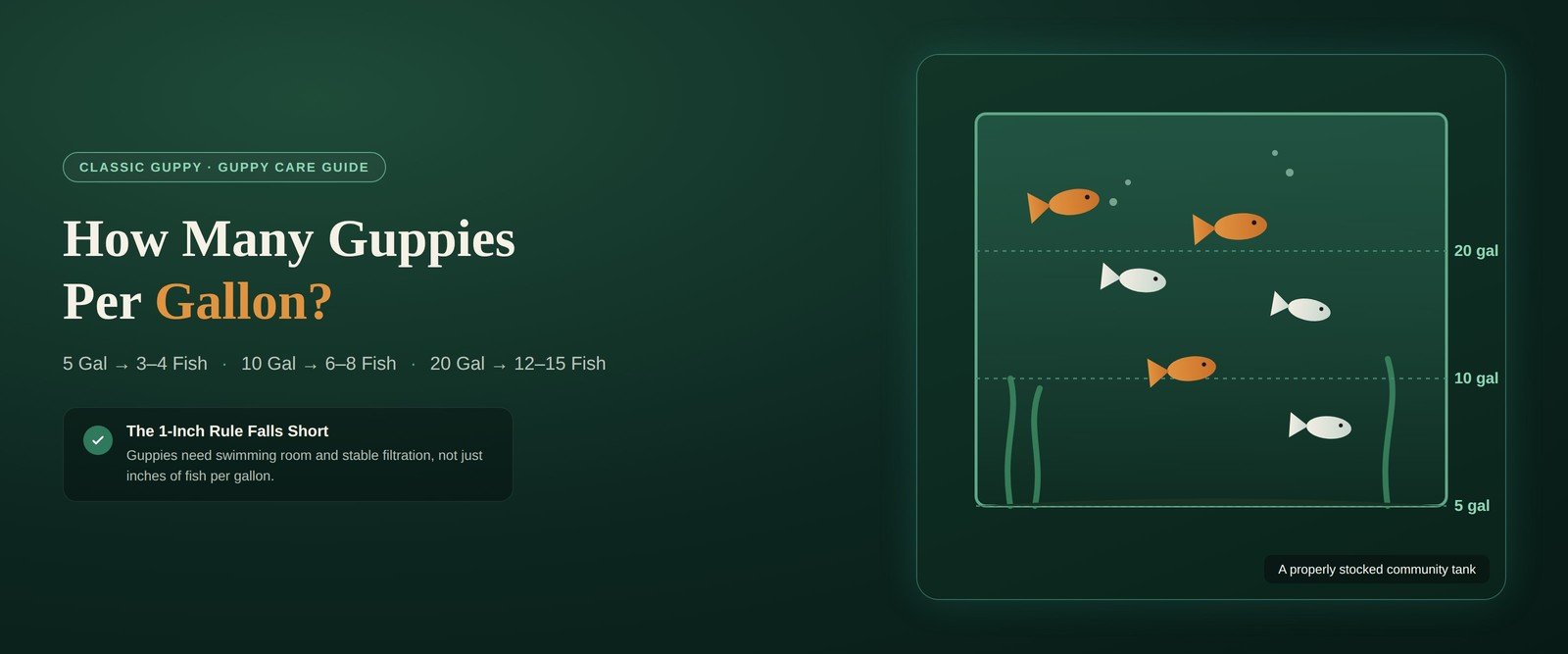
Most new guppy owners ask the same question before they buy a single fish: how many can this tank actually hold. The usual answer floating around online is “one inch of fish per gallon,” but that rule was built for slow growing, low waste fish kept as individuals. Guppies are small, but they are messy for their size, they live in groups, and they breed whether you plan for it or not. Here is a stocking guide built around how guppies actually behave in a home tank, not just how long they measure.
Why the Inch-Per-Gallon Rule Falls Apart Here
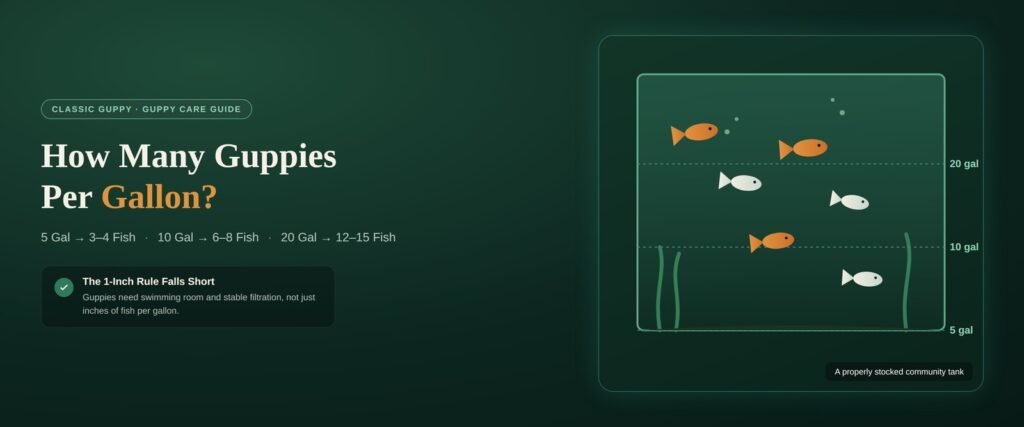
A full grown guppy is roughly one and a half to two inches long, so the old rule says a 10 gallon tank could hold six or seven of them without much thought. In practice that number ignores three things: guppies produce more waste relative to their size than the rule assumes, they need to be kept in a group rather than alone, and a tank that looks correctly stocked on day one can double in population within a couple of months once breeding starts. Treat the inch rule as a rough starting point at best, not a target to hit.
Guppy Stocking Numbers by Tank Size
These numbers assume adult guppies only, a cycled filter, and weekly water changes. The lower number is a safe starting point for a first tank. The higher number applies once you have live plants, strong filtration, and a routine of checking water parameters.
A 5 gallon tank sits at the very edge of what most experienced breeders would recommend for guppies at all. It works for a small group if you are diligent about water changes, but there is very little room for error or for fry.
Get the Male to Female Ratio Right First
Stocking math falls apart fast if you buy the wrong ratio. Male guppies chase females almost constantly to mate, and in a tank with too many males per female, the females get worn down: torn fins, hiding, and visible stress. Aim for one male to every two or three females as a baseline. If you want a calmer tank and do not care about breeding, an all female or all male group also works well and sidesteps the chasing problem entirely.
The Fry Problem Nobody Mentions Upfront
Female guppies can store sperm from a single mating and produce new batches of fry every four to five weeks, with or without a male still in the tank. A tank stocked at 6 adults today can realistically hold 25 or more guppies within two months once a couple of those batches survive. Before you buy fish, decide how you will handle this: a floating plant mat for fry to hide in, a breeder box, a plan to rehome extras to a local shop, or simply keeping a single sex group if you would rather skip breeding altogether.
Signs Your Tank Is Overstocked
- Ammonia or nitrite readings that will not sit at zero even with regular water changes
- Guppies gasping near the surface, especially after the lights go off
- Constant fin nipping or chasing that does not calm down after a week or two
- Water that turns cloudy again within a day or two of a water change
- Algae blooms that keep coming back no matter how often you clean the glass
- Fish looking thin, faded, or listless despite regular feeding
Any one of these on its own might have another cause, but two or three showing up together is a strong signal to cut back on numbers or step up maintenance.
How to Stock a Few More Than the Chart Suggests
If you want to push toward the higher end of the range, a few upgrades make it realistic instead of risky. Run a filter rated for a larger tank than the one you have, or add a second sponge filter for backup biological capacity. Live plants such as guppy grass or java fern soak up ammonia between water changes and give fry somewhere to hide, which lowers stress across the whole tank. Smaller, more frequent water changes usually beat one large change per week, since they keep parameters stable instead of letting waste build up and then swing. Skip heavy bioload tankmates like larger barbs or plecos if you are already near the top of your tank’s capacity.
Frequently Asked Questions
Can I keep just one guppy?
You can, and it will not harm the fish outright, but guppies are a shoaling species and settle in better with company. Three or more is a reasonable minimum if space allows it.
Do these numbers assume I have a working filter?
Yes. Every count in the table above assumes a cycled filter running continuously. Without one, cut the numbers roughly in half and expect to do water changes far more often just to keep the fish alive.
What if I go a couple of fish over the recommended count?
A small amount of wiggle room is usually fine if you are already testing your water and staying on top of changes. Watch ammonia and nitrite closely for the first two weeks after adding new fish rather than assuming everything will settle on its own.
Start near the lower end of these ranges, especially on your first tank. It is much easier to add a few more guppies later than to fix an overstocked tank after ammonia has already spiked.