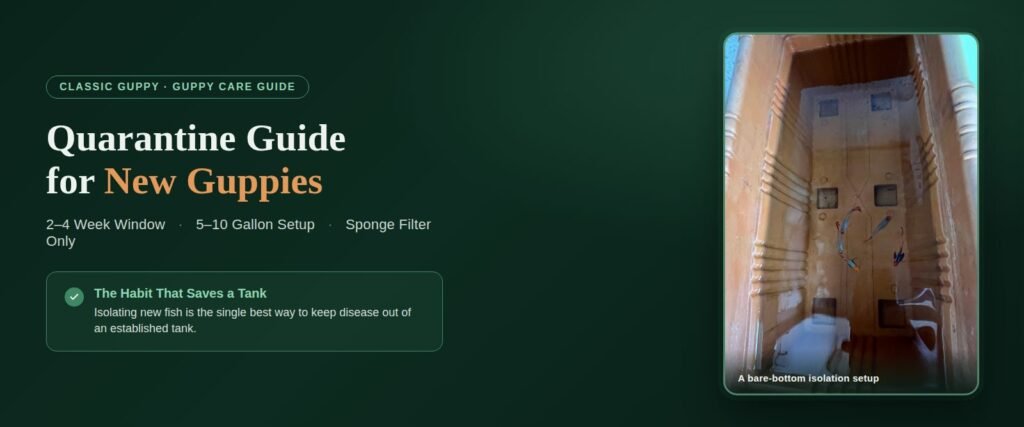
The single most common way disease enters a healthy guppy tank is not bad luck, it is a new fish going straight from the bag into the display tank. Quarantine is the one habit that catches a problem while it is still contained to one small tub, instead of your whole collection.
The Short Answer
- How long: 2 weeks minimum, 4 weeks if you want real peace of mind.
- What you need: a bare 5 to 10 gallon tank or tub, a sponge filter, a heater, and a lid.
- What to watch for: white spots, clamped fins, scratching against objects, and appetite loss.
- Biggest mistake: skipping it entirely because the fish “look fine” in the shop.
Why Quarantine Matters More Than It Seems
Many common guppy diseases, ich especially, have an incubation period. A fish can be carrying parasites for a week or two before any visible symptom shows up, which means a guppy that looks perfectly healthy at the store can still seed an outbreak in your main tank days later. Quarantine simply buys enough time for anything hidden to surface, in a space where treating it does not mean medicating an entire established tank, its plants, and its other inhabitants.
Setting Up a Quarantine Tank
A quarantine tank does not need to be attractive, it needs to be functional and easy to clean.
- Size: 5 to 10 gallons is plenty for a handful of new guppies.
- Filter: a sponge filter is ideal since it is gentle and easy to seed. Squeezing some mature filter media from your main tank into it beforehand avoids running an uncycled tank, the same nitrogen cycle issue covered in our guide to cycling a new tank.
- Heater: keep it in the same range as your main display, covered in our ideal guppy tank temperature guide.
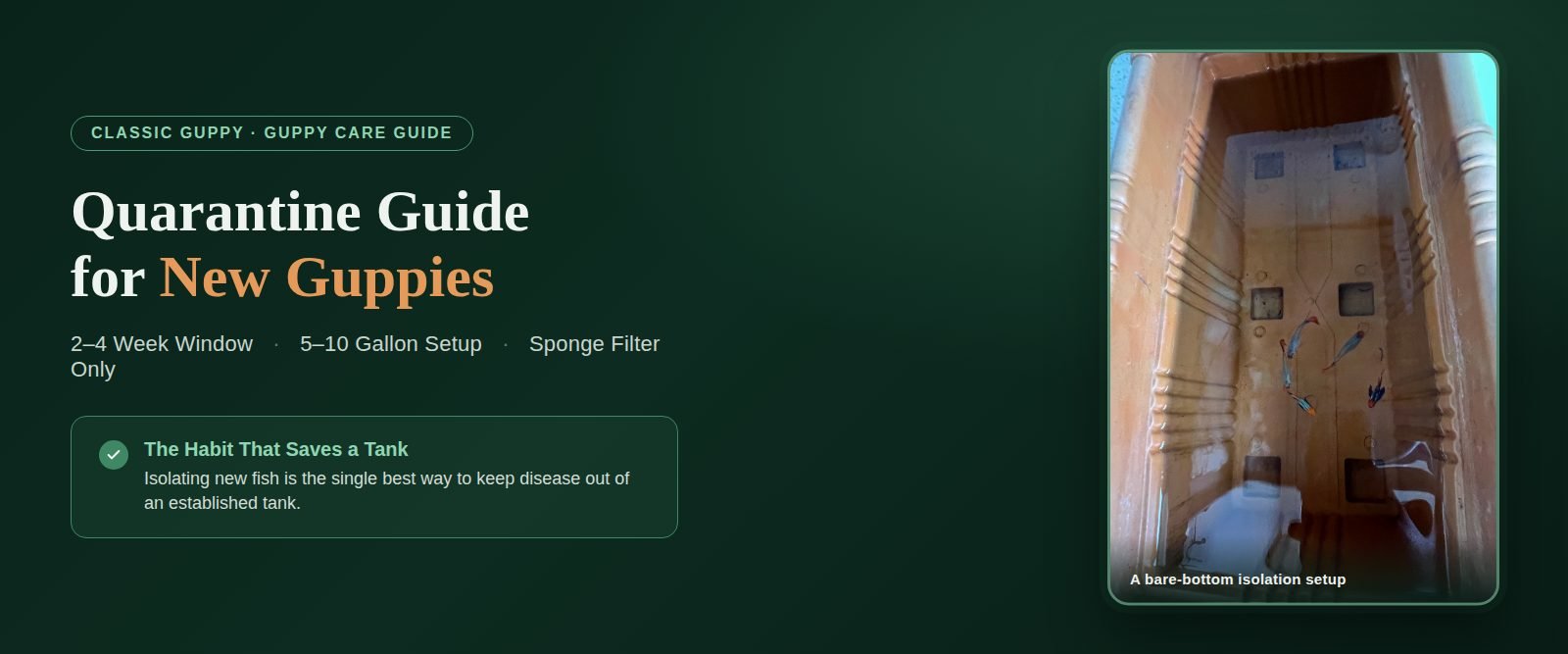
- Substrate: bare bottom is best. It looks clinical, but it makes leftover food, waste, and parasites like anchor worms far easier to spot early.
- Decor: optional and minimal. A single silk plant or piece of pipe for cover reduces stress without making the tank hard to observe or clean.
- Lid: guppies jump, especially stressed new arrivals in unfamiliar water.
The First Four Weeks
- Days 1 to 3: acclimate slowly using the drip method from our acclimation guide, then leave the fish alone. Feed lightly and keep the lights dim.
- Week 1: watch closely for flashing (scratching against decor), clamped fins, or spots. Test ammonia and nitrite every few days since a new QT tank is easy to overload even at low stocking.
- Weeks 2 to 3: this window is when slower-developing issues like ich typically surface. Continue small, frequent water changes rather than one large one, to avoid stressing fish that may already be compromised.
- Week 4: if there have been no signs of illness and the fish are eating and coloring up normally, they are reasonably safe to move into the main tank.
What You Are Actually Watching For
- White spots the size of salt grains across the body and fins, the hallmark of ich.
- Scratching against gravel, decor, or glass (called flashing), a common sign of parasites even before spots appear.
- Ragged or disintegrating fin edges, pointing to fin rot.
- Cotton-like tufts on the body or mouth, a fungal infection.
- Clamped fins, hiding, or loss of appetite, general stress signs that deserve a closer look even without a clear diagnosis.
Our guide to common guppy diseases covers what each of these looks like in more detail, and our guppy medicine list covers dosing if treatment becomes necessary.
Should You Medicate as a Precaution?
This one splits opinion. Some keepers treat every new arrival with a mild, broad anti-parasitic as routine insurance, particularly if the fish came from a crowded shop tank. Others prefer to observe first and treat only if symptoms appear, to avoid unnecessary chemical exposure on fish that may already be stressed from transport. Neither is wrong. If you do treat preventively, use the mildest effective option and never combine multiple medications without knowing they are compatible.
Mistakes That Defeat the Purpose
- Quarantining for less than two weeks. Some parasites simply have not shown themselves yet at day 5.
- Housing new fish with existing fry or stock “just for a few days.” A single shared tank is not quarantine, it is just a delayed introduction.
- Forgetting the QT tank needs a working filter too. An unseeded sponge filter in a small volume of water can spike ammonia within days.
- Using the same net or siphon in both tanks without rinsing. This alone can move parasites straight past the quarantine barrier.
Frequently Asked Questions
Do I really need to quarantine guppies from a trusted seller?
Yes. Even healthy-looking, well-sourced fish can carry parasites that have not shown symptoms yet, and quarantine costs a few weeks of patience against the risk of medicating an entire established tank later.
How long should I quarantine new guppies?
Two weeks is the practical minimum. Four weeks gives a much safer margin, especially for diseases like ich that can take two to three weeks to become visible.
Can I quarantine guppy fry the same way as adults?
Fry are more sensitive to water swings, so keep quarantine water changes smaller and more frequent, and avoid any preventive medication unless a specific illness is confirmed.
What if I do not have a spare tank for quarantine?
A large plastic storage tub or tote with a lid, a heater, and a seeded sponge filter works perfectly well as a temporary setup and costs very little.
Do I need a filter in a quarantine tank?
Yes. Skipping a filter to “keep things simple” is one of the fastest ways to turn quarantine itself into the thing that kills a new fish.
The Short Version
Quarantine is cheap insurance against an expensive problem. Give new guppies their own cycled, minimally decorated tank for two to four weeks, watch closely for the early signs above, and only move them in with the rest of your fish once that window passes clean. Combined with proper acclimation and a tank that is already properly cycled, this is the single habit that keeps outbreaks from ever reaching your main collection.
Once your new guppies clear quarantine, they’re ready to join your main tank. See which fish make good tank mates, or browse our full range of home-bred strains if you’re still deciding what to add.