Guppies are hardy, but most of the health problems new keepers run into — clamped fins, gasping at the surface, sudden deaths after a water change — trace back to water that wasn’t properly prepared. Tap water almost always contains chlorine or chloramine, and its temperature and pH rarely match what’s already in the tank. Preparing guppy water properly takes only a few extra minutes, yet it is the single habit that prevents most avoidable losses. Here is a simple, repeatable process for preparing water any time you fill a new tank or top up an existing one.
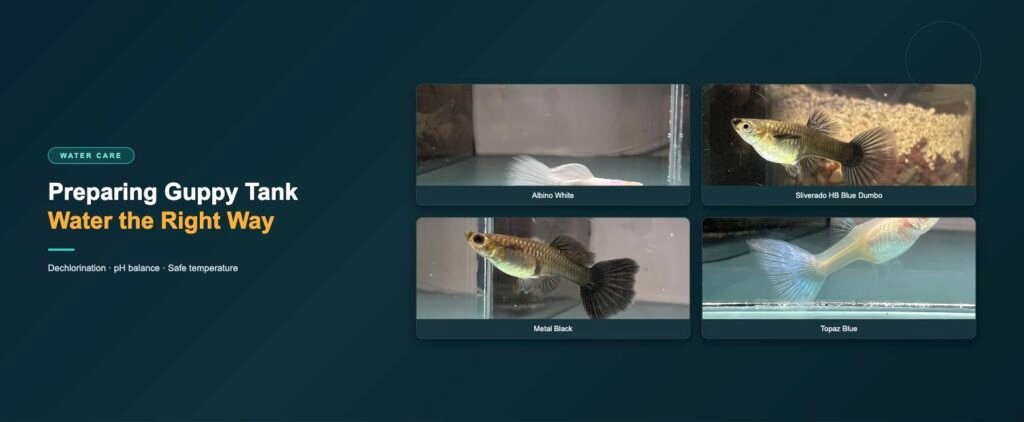
Quick Takeaways
- Always dechlorinate: tap water needs a conditioner to neutralise chlorine and chloramine.
- Match the temperature: pour in water within 1–2°C of tank temperature to avoid shocking guppies.
- Go slow on pH: sudden pH swings are more dangerous than a slightly imperfect but stable number.
- Let water age when you can: 24 hours lets chlorine dissipate and temperature settle.
- Acclimate before releasing: add new water gradually rather than dumping fish straight in.
- Change little and often: small, frequent partial changes are safer than large, rare ones.
Why Water Preparation Matters for Guppies
Guppies breathe through delicate gill tissue that absorbs whatever is dissolved in the water around it, so chlorine, sudden temperature swings, or a sharp pH change hit them far harder than they would a person or even most land pets. Unprepared tap water can burn gills, strip the protective slime coat, and shock the immune system just enough to let existing parasites or bacteria take over. None of this shows up immediately — fish often decline over the following one to three days, which is why keepers wrongly blame something else. Preparing the water first removes this risk before it starts.
Step 1: Dechlorinate Your Tap Water
Almost all municipal tap water contains chlorine or the longer-lasting chloramine, both added to make water safe for humans but harmful to fish gills and the beneficial bacteria in your filter. A water conditioner such as Seachem Prime or API Tap Water Conditioner neutralises both within seconds and is dosed by the drop per gallon rather than guesswork. Add the conditioner to the water first, stir briefly, and only then move on to the remaining steps. Skipping this step is one of the most common reasons a new tank or top-up suddenly turns cloudy or leaves fish gasping at the surface.
Step 2: Match Temperature Before Adding Water
Guppies are tropical fish that do best between roughly 24–27°C, and a sudden drop of even a few degrees can trigger stress, clamped fins, or temperature shock severe enough to harm fry and weaker adults. Before pouring in new water, check it with a simple stick-on or digital thermometer and warm or cool it until it is within a degree or two of the tank. Mixing a little hot water into cold tap water, or letting a filled bucket sit near the tank for an hour, is usually enough to close the gap.
Step 3: Check and Adjust pH Gently
Guppies tolerate a range of pH but do best between about 7.0 and 8.0, and prefer a stable number far more than a “perfect” one that swings around. Test new water with a liquid kit such as the API Freshwater Master Test Kit before adding it, and only adjust gradually with a buffering product if the difference from your tank water is large. Chasing an exact number with sudden, heavy doses of pH adjusters usually causes more stress and fish loss than simply leaving a slightly high or low but stable pH alone.
Step 4: Let the Water Age or Rest
Where possible, prepare water a day in advance rather than using it straight from the tap. Letting dechlorinated water sit for 24 hours in a bucket or spare container allows any remaining gas to escape, lets the temperature settle to room level, and gives you a buffer of ready-to-use water for emergencies. Many experienced breeders keep a dedicated “aging” container running permanently, topped up after each use, so properly conditioned water is always on hand before a scheduled water change or an unexpected tank emergency.
Step 5: Acclimate Your Guppies Slowly
When moving guppies into new water — after a purchase, a large water change, or a tank transfer — never pour them straight in. Float their bag in the tank for 15–20 minutes, then add small amounts of tank water into the bag every five minutes for another 15–20 minutes before releasing them with a net. This drip-style acclimation lets their bodies adjust gradually to small differences in temperature or chemistry rather than all at once, which is often the real cause of “sudden” deaths shortly after a water change.
How Often Should You Change Guppy Tank Water?
Most guppy tanks do best with a 20–30% water change every week, rather than a large, infrequent overhaul. Frequent small changes keep waste and nitrate low without disturbing the beneficial bacteria colony that keeps the tank stable. A simple gravel vacuum and a bucket kept strictly for fish use make this a five-minute weekly habit rather than a chore, and it is far gentler on your guppies than rescuing a badly polluted tank once a month.
None of these steps take long once they become routine, and together they remove almost every water-related risk from your guppy tank. Condition it, match the temperature, keep the pH stable, give it time to age when you can, and acclimate your fish slowly — do that consistently and water quality stops being something you have to worry about.
For the exact numbers to aim for once your water is prepared, see our guide to guppy water parameters.