Feeding a small guppy colony doesn’t have to be expensive, but it’s easy to overspend on fancy labeled foods or waste money by overfeeding and letting food spoil. With a few smart habits, you can keep your guppies just as healthy and colourful on a fraction of the budget most beginners assume they need. Here’s how to cut your guppy food costs without cutting corners on nutrition.
Quick Takeaways
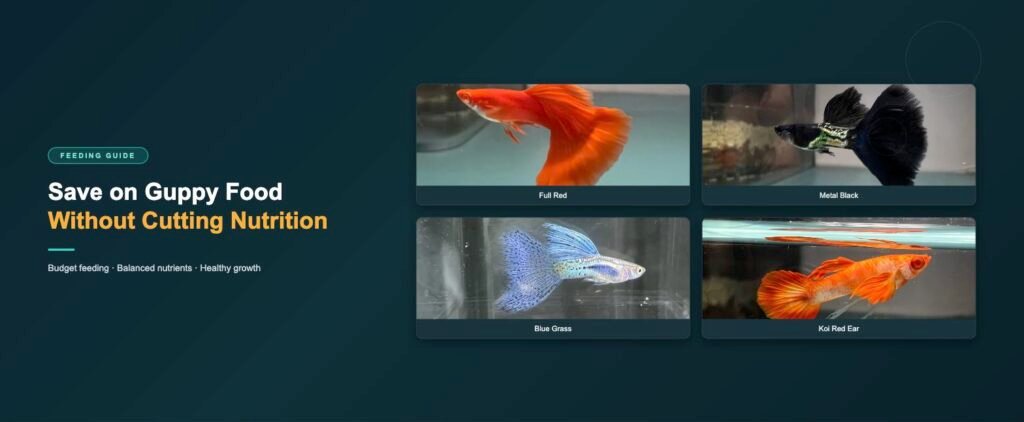
- Buy bulk, not tiny jars: cost per feeding drops sharply with larger packaging.
- Rotate cheap staples with treats: a basic flake or pellet base plus occasional protein goes far.
- Hatch your own brine shrimp: a small hatchery kit replaces expensive frozen packs for pennies a batch.
- Try DIY blended food: homemade mixes stretch further than buying everything pre-made.
- Feed small amounts twice daily: overfeeding wastes money and pollutes the tank.
- Store food airtight: humidity and heat spoil food faster, wasting what you already bought.
Buy in Bulk, Not in Small Jars
Small starter jars of flake or pellet food look cheap on the shelf but cost far more per feeding than a larger bag or tub of the same brand. If you keep more than one or two tanks, buying a larger container of a reputable staple food cuts the cost per feeding dramatically compared with repeatedly buying small jars. Just store the surplus properly (see below) so the savings aren’t lost to spoiled food.
Mix Cheap Staples with Occasional Treats
A basic, inexpensive flake or pellet doesn’t need to be your only food — it just needs to be the reliable daily base. Save premium colour-enhancing foods or live treats for two or three feedings a week instead of every meal, which both stretches your budget and actually mimics a more natural, varied diet. Guppies get most of their nutrition from consistency, not from every single meal being premium, so this mix keeps both your fish and your wallet happy.
Make Your Own Baby Brine Shrimp
Frozen or live baby brine shrimp is one of the best foods for colour and breeding, but buying it pre-hatched repeatedly adds up quickly. A simple brine shrimp hatchery kit costs relatively little upfront and lets you hatch a fresh batch from brine shrimp eggs and aquarium salt for a tiny fraction of the cost of store-bought portions. It takes about 24 hours to hatch a batch, and one bag of eggs can supply months of feedings, making it one of the best cost-per-feeding upgrades available to a guppy keeper on a budget.
Try Homemade or DIY Guppy Food
Blended homemade food — combining ingredients like shelled peas, spinach, unseasoned shrimp, and gelatin as a binder — can be frozen in ice cube trays and fed in small portions over weeks, often costing far less per feeding than commercial equivalents. It also lets you control exactly what goes into your guppies’ diet. This isn’t necessary for every keeper, but for anyone feeding a larger colony regularly, it’s one of the most effective ways to cut long-term food costs.
Use Kitchen Scraps Wisely
Small amounts of blanched, skinned vegetables like zucchini, spinach, or peas make an occasional, nearly free addition to a guppy’s diet and offer fibre that helps digestion. Only use plain, unseasoned produce, cut into small enough pieces for a guppy’s tiny mouth, and remove any uneaten portion within a couple of hours so it doesn’t foul the water. This won’t replace a proper diet, but it’s a useful, free way to add variety a couple of times a week.
Avoid Overfeeding (It Wastes Food and Money)
Overfeeding is one of the most common and avoidable ways guppy keepers waste money — uneaten food doesn’t just disappear, it pollutes the water, drives up the frequency of costly water changes, and is simply food you paid for that never gets used. Feed only what your guppies can finish in about two minutes, twice a day, and you will likely find a single container of food lasts noticeably longer than expected.
Store Food Properly to Avoid Waste
Heat, humidity, and air exposure break down fish food and can encourage mould in bulk containers, effectively wasting money on food that has to be thrown out. Keep containers tightly sealed, store them somewhere cool and dry, and consider portioning a large bulk order into smaller airtight containers so only one is opened and exposed to air at a time.
None of these changes require sacrificing nutrition — buying smarter, hatching your own live food, and simply avoiding waste can cut a guppy food budget substantially while keeping your fish just as healthy and colourful.
Buying well is one half of the saving and feeding well is the other. Our guide to how often to feed guppies covers portions and schedule.