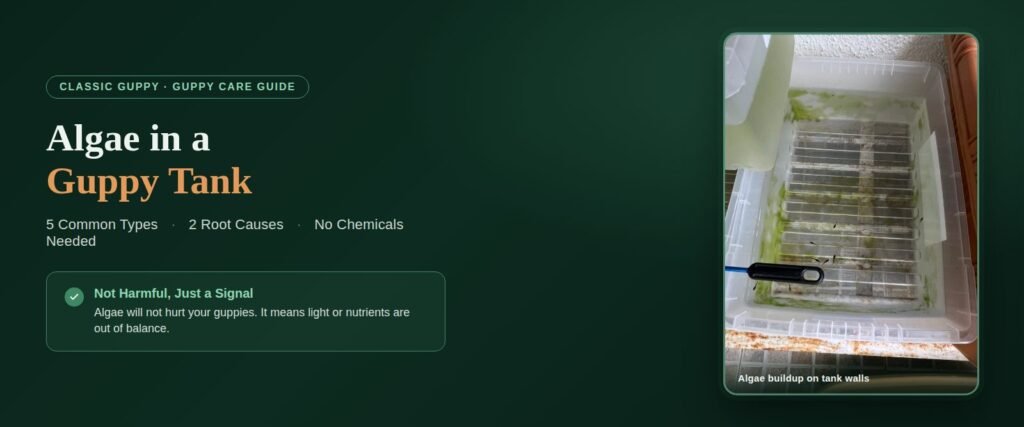
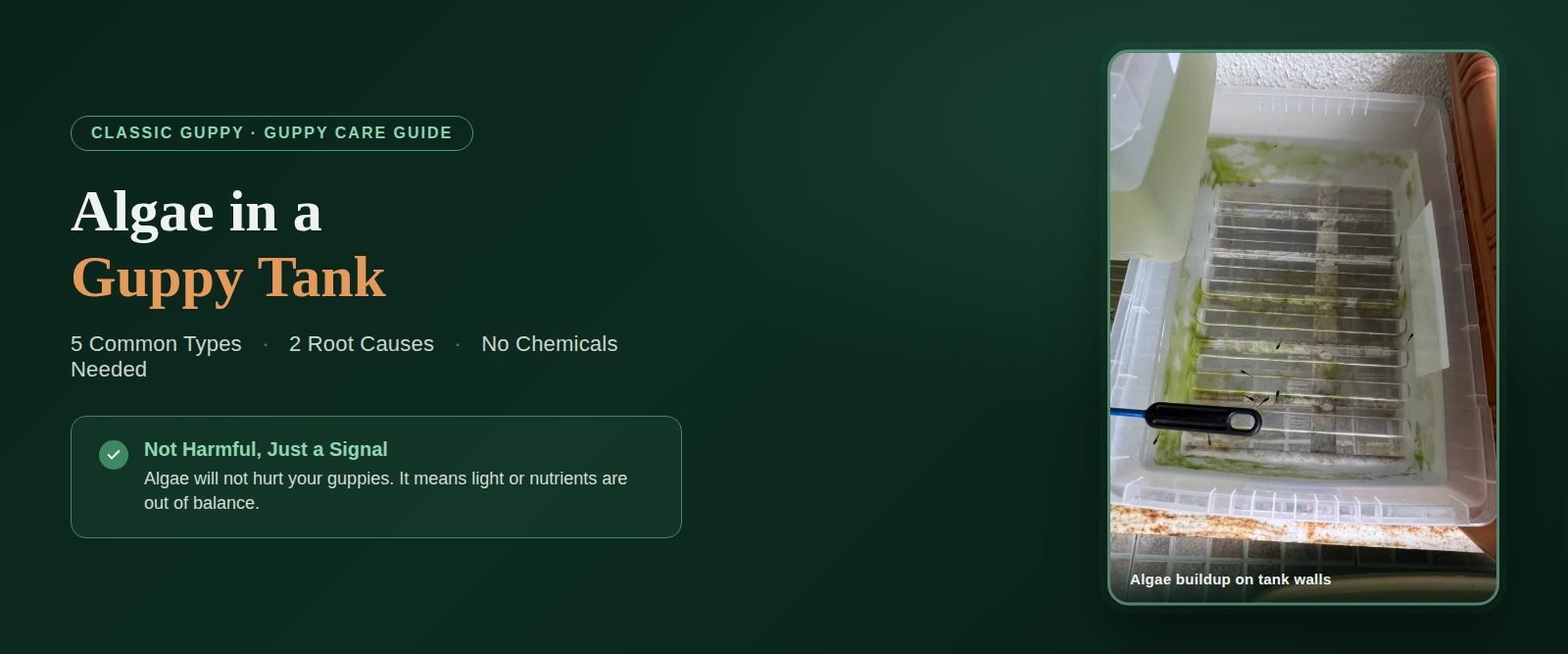
A little algae on the glass is not a crisis, it is a sign your tank is alive. A tank turned pea-green overnight, or glass covered in hard brown spots within a week of setup, is a different story, and almost always traces back to light or leftovers rather than anything wrong with your filter.
The Short Answer
- Cause, almost always: too much light, too many nutrients, or both.
- Fastest fix: cut light to 6 to 8 hours a day, reduce feeding, and increase water changes.
- Best long-term fix: fast-growing live plants that outcompete algae for the same nutrients.
- Is it dangerous to guppies: no, algae itself will not harm them. What is feeding it usually will, eventually.
The Algae You Are Actually Looking At
Not all algae means the same thing, and treating the wrong one usually wastes weeks.
- Brown algae (diatoms): a dusty brown film on glass and substrate, almost universal in tanks under two months old. It feeds on silica and fades on its own as the tank matures. Wipe it off and move on.
- Green spot algae: hard, circular green dots stuck to glass and slow-growing decor. Points to strong light paired with low nutrients, often on the sunward side of a tank.
- Green water: the whole tank turns cloudy pea-soup green from free-floating single-cell algae. Almost always direct sunlight or a light left on far too long, combined with excess nutrients.
- String or hair algae: long green threads draped over plants and decor. A classic sign of excess light and excess nutrients together, usually from overfeeding or an overdue water change.
- Black beard algae (BBA): dark, bristly tufts that grip plant leaves and hardscape stubbornly. Linked to unstable CO2 and flow, and the hardest of the five to shift with water changes alone.
What Is Actually Feeding It
Algae needs exactly two things: light and nutrients. Every outbreak comes back to one or both being oversupplied.
- Too many hours of light, or a tank catching direct sunlight through a window for any part of the day.
- Overfeeding, since uneaten food breaks down into the same nitrogen compounds algae feeds on. This is the same habit covered in our guide to how often to feed guppies.
- Water changes skipped or stretched too far apart, letting nitrate and phosphate build up between cleanings.
- No live plants competing for those same nutrients, leaving algae as the only organism using them up.
Getting Rid of It, in the Right Order
- Cut the light first. Put it on a timer at 6 to 8 hours a day and move the tank out of direct sun if at all possible. See our guide to guppy tank lighting for what a reasonable duration and intensity actually looks like by tank size.
- Scrub and remove manually. An algae scraper for glass and a soft toothbrush for decor gets rid of the visible bulk immediately, which matters because dead algae still releases nutrients back into the water.
- Increase water changes temporarily. Bump up to weekly, following the routine in our guppy water change guide, until the outbreak is under control.
- Add fast-growing live plants. Java fern, guppy grass, and anubias are covered in our low-maintenance plant picks and will starve out algae over several weeks simply by using the nutrients first.
- Bring in a cleanup crew. Nerite snails are the standout choice for a guppy tank since they eat algae aggressively and cannot reproduce in freshwater, so numbers stay controlled. Amano shrimp and otocinclus catfish are solid alternatives. All three are covered in our guppy tank mates guide.
When to Reach for Chemical Algae Control
Liquid algaecides exist and they do work, but they treat the outbreak, not the cause, and most will also harm live plants and shrimp. Reserve them for green water blooms that refuse to clear after a week of reduced light and feeding, and always remove carbon filtration during dosing since it strips the treatment straight back out. A UV sterilizer is a gentler, reusable option that specifically targets free-floating green water algae as it passes through the unit, without touching plants or invertebrates.
Mistakes That Make Algae Worse
- Doing a total blackout on a whim. A 2 to 3 day blackout can help a severe green water bloom, but doing this routinely just stresses plants and fish without addressing light duration or nutrient load.
- Adding a full cleanup crew overnight. A sudden population of snails or shrimp with nothing to eat once the algae clears will start competing for food. Add them gradually as algae is already reducing.
- Blaming the filter. Filtration affects water clarity and flow, not the light and nutrient balance that actually drives algae growth.
- Stripping everything out in one go on an established tank. A sudden nutrient swing after months of an algae-fed imbalance can stress plants that had adjusted to it. Scale changes back over one to two weeks instead of overnight.
Frequently Asked Questions
Is algae bad for guppies?
Not directly. Guppies swim through algae constantly with no ill effects, and will even nibble at soft films as a snack. The concern is what caused it, since the same excess nutrients that feed algae can also mean poor water quality overall.
Do guppies eat algae?
They will pick at soft biofilm and green water particles, but guppies are not effective algae control on their own. Pair them with nerite snails, amano shrimp, or otocinclus for real cleanup.
How much light actually causes algae?
More than 8 to 10 hours a day is the most common trigger, and any direct sunlight hitting the tank will cause an outbreak regardless of how short the artificial lighting period is.
Will a UV sterilizer fix all types of algae?
No, only free-floating types like green water, since it works on algae cells passing through the water column. It has no effect on algae attached to glass, decor, or plant leaves.
How long does it take to get rid of an algae outbreak?
Brown diatoms clear on their own within a few weeks as a tank matures. Green spot, string algae, and green water usually respond to a light and feeding correction within 1 to 2 weeks. Black beard algae is the slowest and can take a month or more of consistent CO2 and flow correction.
The Short Version
Algae grows on light and leftovers, not on dirty filters. Identify which type you actually have, cut the light back to 6 to 8 hours, ease off feeding, and let live plants and a small cleanup crew do the rest. Chemical treatments are a last resort for green water blooms only. For the water-quality side of prevention, our guppy water parameters guide covers the nitrate and phosphate ranges worth keeping an eye on.
Algae is often a sign that filtration or plant balance needs adjusting — see our filter guide and low-maintenance plant picks to help keep it in check. Regular partial water changes help too — read our guppy water change guide for a step-by-step routine.