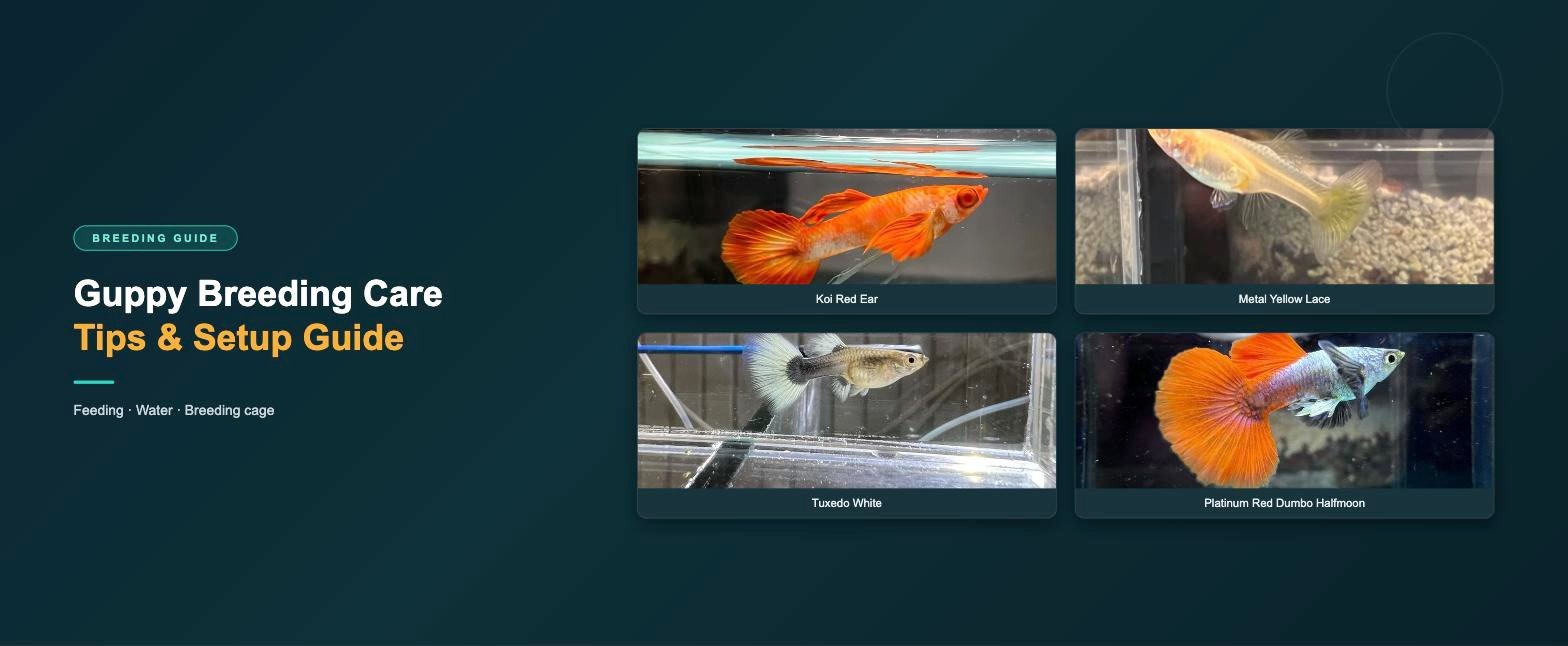
Guppies breed readily in almost any home tank, but breeding well — with strong, healthy fry that survive to adulthood — takes a bit more than letting nature take its course. The right tank setup, food, water conditions, and a properly used breeding cage make the difference between losing most of a batch to hungry tankmates and raising dozens of healthy young guppies every few weeks. This guide covers the core pieces of guppy breeding care: environment, nutrition, water, and how to protect fry once they arrive.
Quick Takeaways
- Keep a ratio: one male to two or three females reduces stress on individual females.
- Feed for breeding: protein-rich foods like brine shrimp support egg and fry development.
- Keep water stable: warm, clean, stable water encourages more frequent, healthier broods.
- Use a breeding cage or box: isolates a pregnant female or fry from hungry tankmates.
- Watch the gravid spot: a darkening belly patch signals pregnancy is progressing.
- Feed fry small and often: 3–4 small feedings a day grow fry faster than one big one.
Setting Up a Dedicated Breeding Tank
A separate 5–10 gallon breeding tank gives you full control over water conditions and protects a pregnant female from the stress of a crowded community tank. Keep the setup simple: a sponge filter (safer than a power filter that can pull in fry), floating plants such as water lettuce or hornwort for fry to hide in, and a heater holding a steady 25–27°C. Avoid substrate with deep, small nooks, and limit tankmates to a small, calm breeding group rather than a mixed community, so newborn fry have the best chance of surviving their first days.
Choosing and Feeding Breeding Guppies
Healthy breeders start with good genetics: choose active, well-proportioned adults without deformed spines or clamped fins, and avoid repeatedly breeding closely related fish. Feed breeding guppies a varied, protein-rich diet — a quality flake or pellet as the base, topped up with live or frozen foods such as baby brine shrimp, daphnia, or bloodworms two to three times a week. This extra protein supports stronger eggs, more frequent broods, and better colour development in the resulting fry. Avoid relying on fatty foods alone, since an overweight female can actually struggle to breed successfully.
Water Conditions for Breeding Success
Guppies breed most reliably in warm, stable, clean water — aim for 25–27°C, a stable pH around 7.0–8.0, and weekly 20–30% water changes to keep waste low. Fluctuating temperature or poor water quality is one of the most common reasons a female fails to breed or reabsorbs a brood. A reliable heater and a simple thermometer remove most of the guesswork from keeping conditions steady, and a gentle sponge filter keeps the water clean without risking fragile newborn fry.
Using a Breeding Cage or Box
A floating breeding cage or box lets you isolate a visibly pregnant female just before she gives birth, protecting the fry from being eaten the moment they arrive. Move her in once you notice a swollen belly and a dark gravid spot near the tail, and keep her in the cage only long enough to give birth — extended confinement in a small cage can stress her unnecessarily. Many boxes include a separate compartment that lets newborn fry drop through slots away from the mother, which matters since guppies will happily eat their own fry given the chance.
Recognising a Pregnant Female
A pregnant, or gravid, female guppy develops a noticeably rounder, boxier belly and a darkening patch near the base of the tail called the gravid spot, which deepens in colour as the fry get closer to being born. She may also become more reclusive, hiding near plants or in tank corners during the final day or two. Since guppies can store sperm and give birth roughly every 26–31 days without a male present, tracking the gravid spot is the most reliable way to predict when to move her into a breeding cage.
Caring for Fry After Birth
Newborn guppy fry are fully independent from birth and need to eat almost immediately — offer crushed flake, powdered fry food, or baby brine shrimp three to four small times a day rather than one large feeding. Keep them in a heavily planted grow-out tank or the same breeding box compartment for their first one to two weeks, until they are large enough to avoid being eaten by adults. Regular small water changes and stable warmth around 26°C speed up growth noticeably, and within about a month most fry are large enough to rejoin a calm community tank.
Successful guppy breeding really comes down to four things done consistently: a calm dedicated space, protein-rich food, stable warm water, and a breeding cage used at the right time. None of it requires expensive equipment — just consistency — and once the routine is set, a healthy, colourful batch of fry every few weeks becomes the norm rather than the exception.