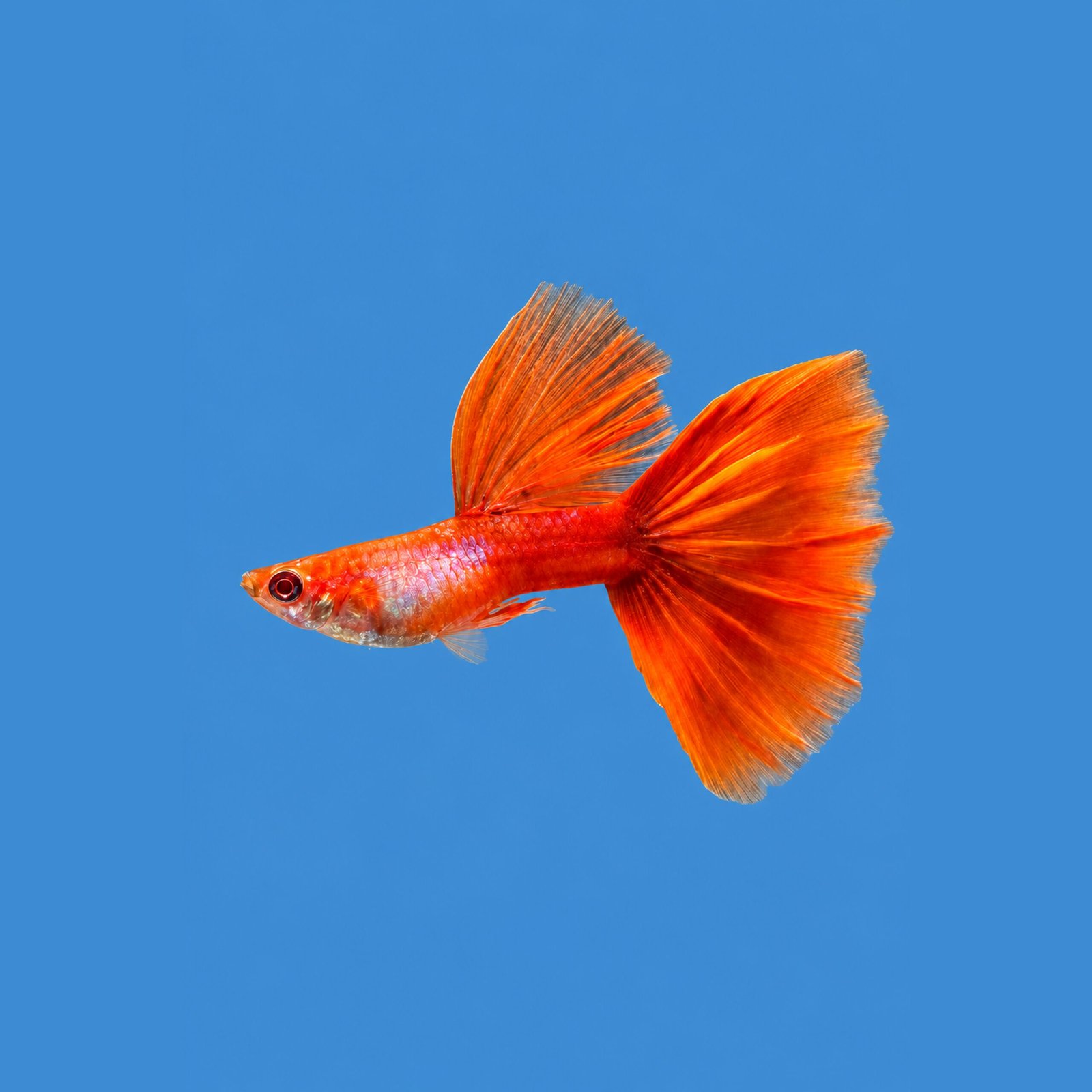

Raising healthy, colourful guppies comes down to a few essentials: the right tank setup, clean water, good nutrition, and knowing how to spot problems early. Guppies are famously hardy and easy to breed, which is exactly why they are one of the most popular freshwater fish in India, but a little correct information goes a long way toward avoiding the most common beginner mistakes. We’ve organised our full library of care guides below by topic, and added a quick-reference summary and FAQ, so you can jump straight to what you need.
Guppy Care at a Glance
- Water temperature: 24-27°C (75-80°F)
- pH range: 7.0-8.0 (guppies prefer slightly alkaline water)
- Minimum tank size: around 40 litres for a small starter group
- Stocking density: roughly 2 litres of water per adult guppy
- Diet: high-quality flake or micro pellets, supplemented with live or frozen foods such as baby brine shrimp (BBS)
- Feeding frequency: 1-2 small meals a day for adults; fry benefit from 3-4 smaller feeds
- Gestation period: roughly 21-31 days from mating to a visible batch of fry
- Average lifespan: 1 to 3 years with good care
Choosing Your Guppies
New to guppies, or looking to expand your collection? Start here to learn what to look for and which strain suits you best. Healthy guppies should show bright colouration, fully unfurled fins, active swimming, and a rounded, not pinched, belly.
- Newbie Guide to Choosing Guppies: A Beginner’s Guide to Picking Your First Fish
- Guppy Strain Guide: Popular Types of Guppy Fish (And How to Choose Yours)
- How to Choose the Perfect Guppy Breeding Pair
Tank Setup & Tank Mates
A stable, well-lit tank is the foundation of healthy guppies. As a general rule, allow at least 2 litres of water per adult guppy and avoid fin-nipping species. Peaceful community fish such as corydoras, otocinclus, and small tetras usually make good tank mates, while bettas and larger cichlids are best avoided, since they tend to chase and nip at guppies’ long fins. A tightly fitted lid matters too: guppies are strong jumpers, especially when startled or when water quality drops.
Water & Temperature
Guppies are hardy, but they still do best in stable, well-conditioned water within their ideal temperature range of roughly 24-27°C. Sudden swings in temperature or pH are far more dangerous to guppies than a slightly imperfect but stable environment, so aim for consistency over perfection, and always dechlorinate tap water before adding it to the tank.
- How to Prepare Guppy Fish Water: A Complete Water Preparation Guide
- Ideal Guppy Tank Temperature (and How to Maintain It)
Feeding & Fry Care
What you feed your guppies, and their fry, directly affects growth speed and colour development. Adult guppies do well on a good-quality staple food fed once or twice daily, while fry grow fastest on smaller, more frequent feeds of finely crushed food or live baby brine shrimp. Overfeeding is one of the most common causes of poor water quality in home aquariums, so feed only what your fish can finish within two to three minutes.
- The Secret to Fast-Growing Guppy Fry: A Complete Feeding & Care Guide
- How to Save on Guppy Fish Food Without Compromising Nutrition
- Guppy Growth Timeline: From Fry to Full Colour in 3-4 Months
Breeding
Ready to breed your own guppies? Female guppies can store sperm and produce multiple broods from a single mating, so it is worth separating males and females early if you want to control breeding. A pregnant female typically carries fry for around three to four weeks before giving birth, and a breeding cage or heavily planted tank will help protect the fry from being eaten by adults.
Health & Disease Prevention
Catching illness early makes all the difference. Watch for early warning signs such as clamped fins, loss of appetite, unusual resting at the surface or bottom, or visible spots and discolouration, and treat promptly once identified.
- Common Guppy Diseases: Symptoms, Causes & Treatment
- Guppy Fish Medicine List: How to Use Each Medicine Safely
- Top Factors Affecting Guppy Fish Lifespan
Grooming & Show Quality
Want show-ready fins and vibrant colour? Consistent water quality, a varied diet, and reduced stress contribute far more to fin and colour quality than any single trick.
More Tips
Seasonal Care Tips for Indian Guppy Keepers
Because temperature and humidity swing noticeably across the year in most of India, seasonal adjustments matter more here than in climate-controlled setups. During peak summer, unheated tanks can climb above the ideal range, so keep tanks out of direct sunlight and consider a small fan over open-top tanks to aid evaporative cooling. During the monsoon, humidity and frequent power cuts can affect filtration and heating equipment, so it is worth keeping a battery-powered air pump on hand and checking your heater’s accuracy regularly. In winter, especially in northern regions, tank temperatures can drop below the comfortable range overnight, so a thermostat-controlled heater is worth the investment for stable breeding and fry survival.
Frequently Asked Questions
How often should I feed my guppies?
Once or twice a day is usually enough for adults; give them only as much as they can finish in two to three minutes.
Can guppies live with bettas?
It’s risky. Bettas often see guppies’ flowing fins as a target, so this pairing is best avoided unless you have a very large, heavily planted tank.
How long do guppy fry take to grow?
Most fry reach a recognisable adult size and colour within three to four months with good feeding and water quality.
Do guppies need a heater?
In much of India this depends on the season. If room temperature stays reliably within 24-27°C year-round a heater may not be necessary, but one is recommended for winter months or air-conditioned rooms.
How many guppies can I keep together?
As a rough guide, allow about 2 litres of water per adult guppy, and keep more females than males to reduce stress from constant mating attempts.
Have a question we haven’t covered here? Message us on WhatsApp and our team will help with food suggestions, medicine, and general care advice.