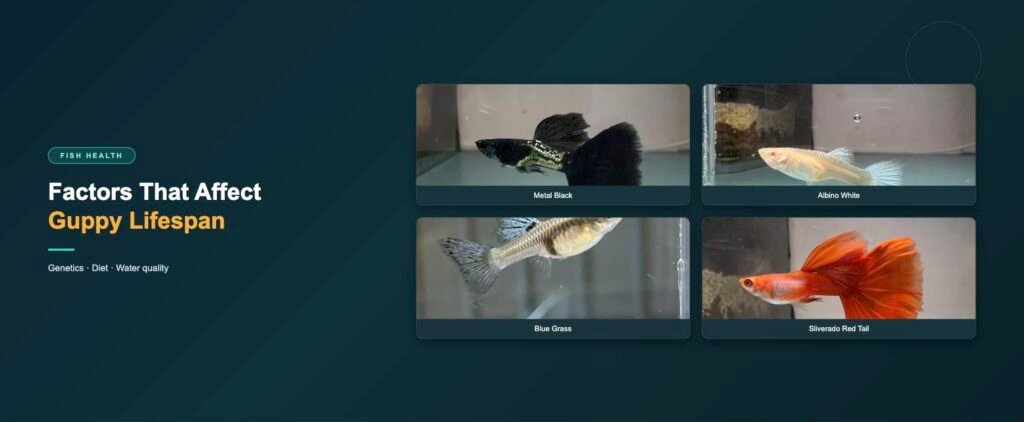
Guppies typically live two to three years, but it’s common to see some guppies barely make it past a year while others in a well-run tank live closer to three. That gap almost never comes down to luck — it’s driven by a handful of specific, controllable factors. Understanding what actually shortens or extends a guppy’s life lets you make targeted improvements instead of guessing, so let’s look at the factors that matter most.
Quick Takeaways
- Water quality leads: stable, clean water affects lifespan more than any other single factor.
- Genetics set the ceiling: strain and bloodline quality influence maximum potential lifespan.
- Diet matters: varied, balanced nutrition supports a stronger immune system long-term.
- Avoid overcrowding: too many fish in too little space raises stress and disease risk.
- Limit tank mate aggression: constant chasing or nipping shortens life through chronic stress.
- Frequent breeding shortens female lifespan: non-stop pregnancies wear females down faster.
Water Quality Is the Single Biggest Factor
More guppies die early from poor water quality than from any disease or genetic issue. Ammonia and nitrite spikes, even brief ones, damage gills and organs in ways that shorten a fish’s life even if it survives the immediate exposure. Weekly 20–30% water changes, a properly cycled filter, and not overstocking the tank do more for lifespan than almost any other single habit. If you only improve one thing to help your guppies live longer, consistent water quality should be it.
Genetics and Strain
Some guppy strains and bloodlines are simply hardier than others, and heavy inbreeding within a strain over many generations can shorten the natural lifespan of an entire line. Buying from a breeder who avoids excessive inbreeding, or introducing occasional new unrelated stock into your own breeding line, helps maintain the genetic health that supports a normal two-to-three-year lifespan. There’s a ceiling genetics sets that good care alone can’t fully overcome, which is part of why lifespans vary even between fish kept in identical conditions.
Diet and Nutrition
A varied diet — a quality staple food supplemented with occasional live or frozen protein and the odd vegetable — supports a stronger immune system than feeding a single food type every day. Overfeeding is just as damaging as underfeeding, since it stresses organs over time and pollutes the water, indirectly hurting lifespan through both nutrition and water quality. Consistent, moderate feeding twice a day tends to produce longer-lived fish than either extreme.
Tank Size and Stocking Density
Cramming too many guppies into too small a tank raises stress hormones, increases aggression and competition for food, and makes water quality far harder to maintain, all of which shorten lifespan even when the fish don’t show obvious symptoms. A general guideline of roughly one guppy per litre of water, adjusted for filtration and plant cover, gives fish enough space to establish territory and reduces the chronic low-level stress that comes with overcrowding.
Stress and Tank Mates
Constant chasing, fin-nipping, or bullying from aggressive tank mates keeps a guppy’s stress hormones elevated, which weakens its immune system over time even without any single dramatic injury. Choosing calm, compatible tank mates and providing enough plants or décor for guppies to retreat to when they want space both meaningfully extend average lifespan in a community tank. A visibly stressed, constantly hiding guppy is very rarely going to reach its full potential lifespan.
Breeding Frequency (Especially for Females)
Female guppies that breed continuously, brood after brood without any rest, tend to have noticeably shorter lifespans than females given occasional breaks, since pregnancy and giving birth place a real physical toll on their bodies. Keeping males and females separated periodically, or maintaining a higher female-to-male ratio to spread out mating attention, lets females recover between broods and generally extends their productive, healthy years.
Temperature Stability
Guppies tolerate a range of temperatures but do poorly with frequent swings, which stress their metabolism and immune system over time. A reliable heater holding a steady 24–27°C, rather than a tank that swings with room temperature throughout the day, removes one more source of chronic stress that can quietly shorten a guppy’s life.
None of these factors work in isolation — stable water, decent genetics, good nutrition, reasonable stocking density, low stress, and stable temperature all stack together, and improving even two or three of them noticeably shifts the odds toward your guppies living a full, healthy lifespan.